
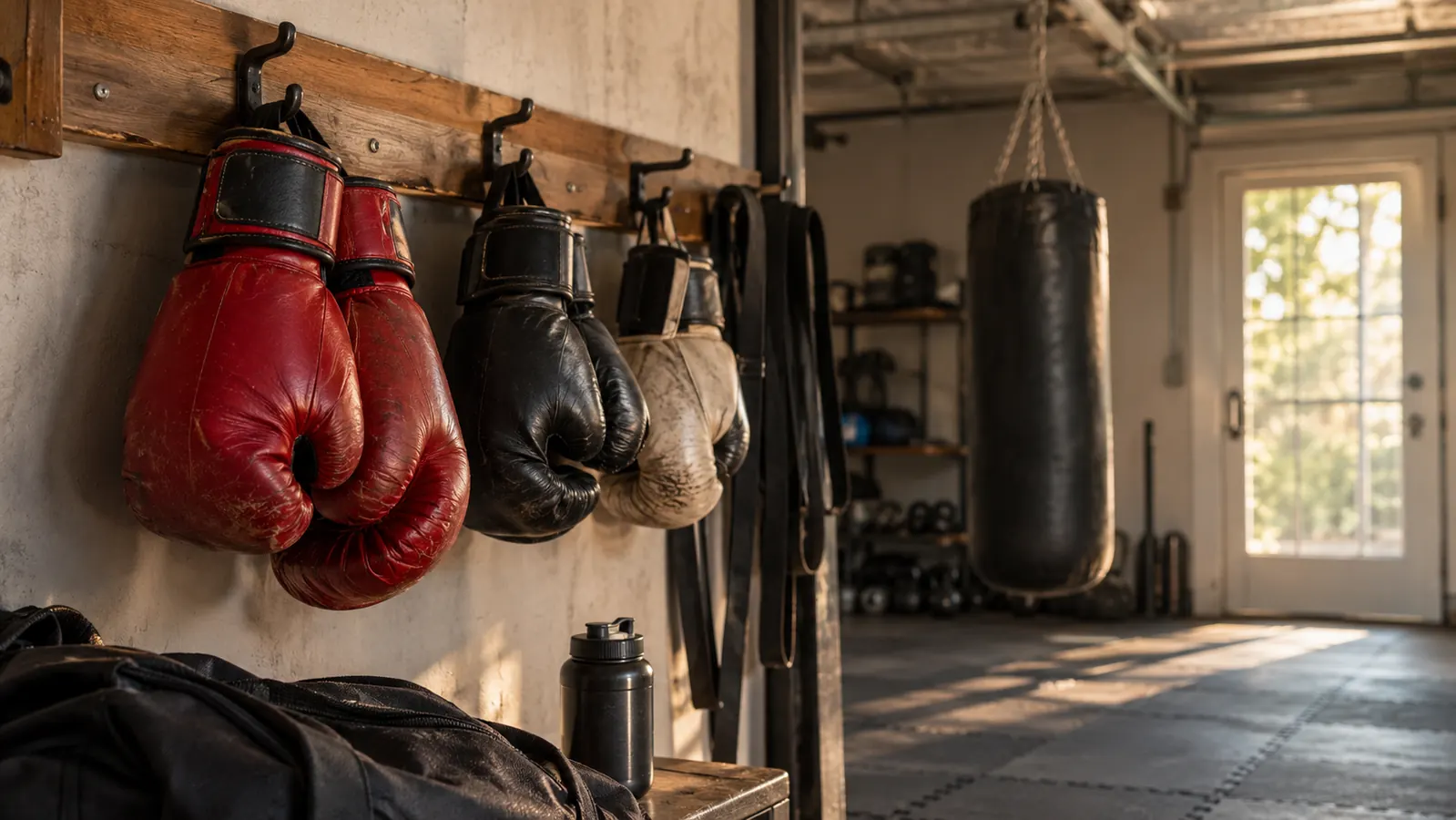
Every January a few new adults walk into my club in Columbus with the same question, and they usually phrase it the same way. Which gloves do I buy first. Two names come up more than any others in that conversation: the RDX training gloves and the Venum Challenger sparring gloves. I have had my own pair of the RDX for about 14 months now, four or five mornings a week on the heavy bag in my garage and in the Tuesday and Thursday adult kickboxing class. I do not own a pair of the Challenger. I have had it on my hands maybe thirty times over the same stretch, always on a student who bought a pair and wanted me to look at the fit and the closure.
So here is the short answer. If you are going to hit a bag, work pads and do partner drills several times a week, the RDX is the better glove, and the gap is mostly in the padding and the wrist support. The Venum Challenger wins on two things, and they are real wins. It is cheaper to get into, and it fits a slimmer hand better straight out of the box. If you are buying your first pair and you are not certain you will still be training in six months, buy the Challenger. If you already know you are staying, buy the RDX and skip the upgrade you would otherwise be making in eight months.
| RDX Boxing Gloves | Venum Challenger | |
|---|---|---|
| Cost of entry | Mid range for a training glove | One of the cheapest ways into a real sparring glove |
| Foam construction | Multiple layers under a pre-curved anatomical shape | Single density foam in a flatter profile |
| Knuckle protection on the bag | Firm base under the soft layer, holds up to heavy rounds | Adequate for pads, takes a set under hard bag work |
| Wrist support | Full wraparound hook-and-loop closure | Shorter strap with less coverage across the wrist |
| Palm ventilation | Ventilated palm panel | Mesh palm panel |
| Fit for slim hands | Roomy hand compartment built for adult sizing | Slimmer cut through the hand and wrist |
| Break-in period | Usable for pads from the first session | Stiff for the first few weeks |
| Closure life | Strap still gripping at 14 months of my own use | Closure is the first part to go on the pairs I have handled |
| Hard sparring at heavier weights | Comes in up to 18 oz, a sensible sparring weight; for sparring-heavy training, compare a dedicated sparring glove | Better suited to class and technical work |
| First pair for a total beginner | More glove than a beginner needs on day one | Simple, cheap starting point for a trial month |
Where RDX Wins
The padding is the whole argument. The RDX glove is built from multiple layers and it carries a pre-curved anatomical shape, which is the part I notice first because I am the one holding mitts for beginners all night. A glove that already sits in a fist shape means the student is not fighting it to close their hand. RDX calls the fist-forming piece their patent pending LOMA tech design. I do not know what is inside it and I am not going to pretend I do. What I can tell you is that a nervous student who puts a pair on at the gear rack closes their hand faster than the one fighting a flat, stiff glove.
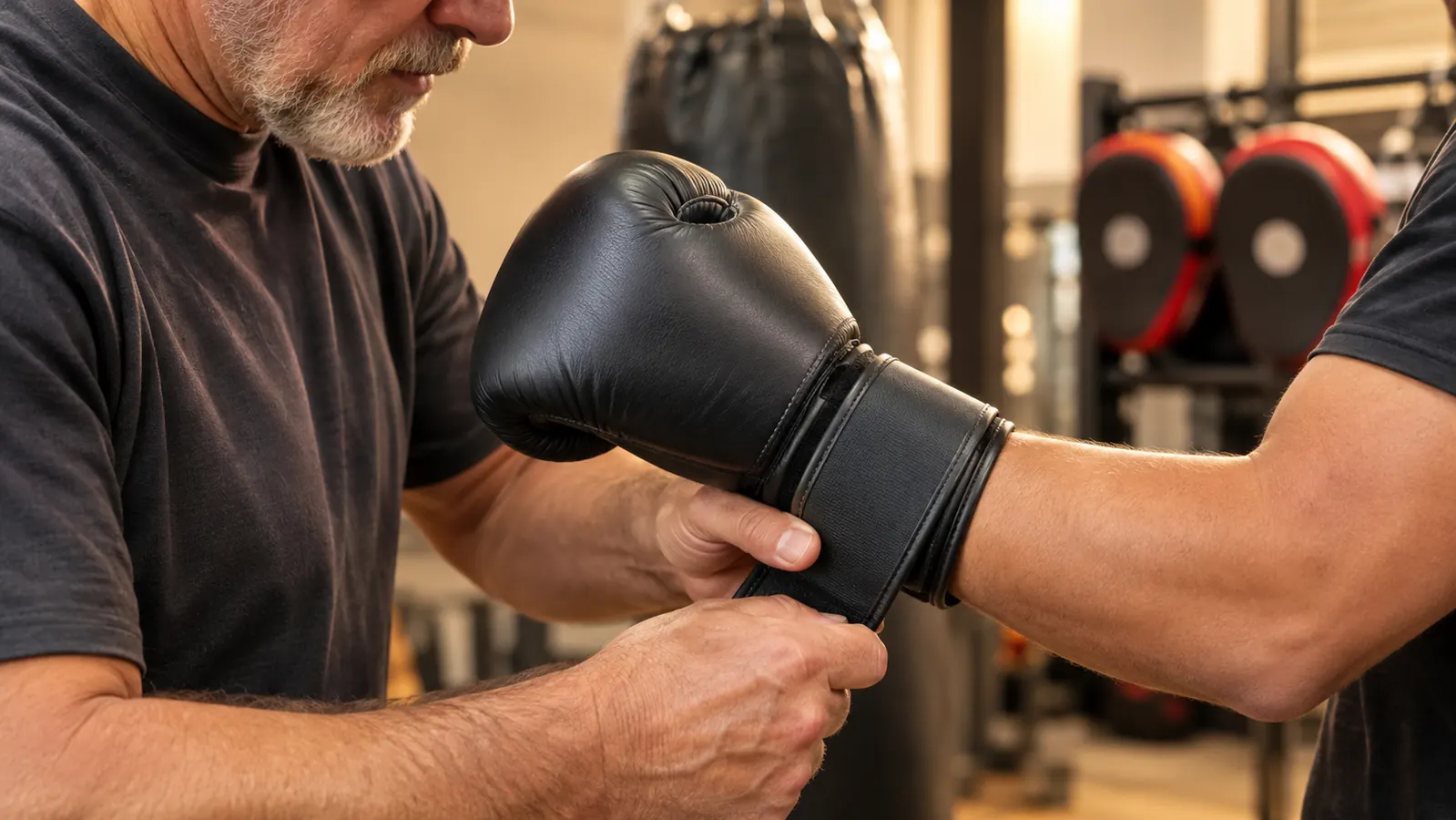
The wrist support is the second thing, and for anybody with an old hand or wrist problem it may be the first. The RDX has a full wraparound wrist closure with a hook-and-loop strap that comes across the back of the wrist rather than just pinching in at the sides. On my pair that strap still grips at 14 months, and the edge has not curled the way cheaper closures do. My left knee is the injury everybody in my club knows about, but my wrists have taken a beating too from fifteen years of holding pads, and I can feel the difference between a glove with real wrist coverage and one without.
The knuckles are where most budget gloves give up. Mine are 18 oz, which is heavier than most adults need for class, and it is exactly what I want for a hard bag round or for partner drills where the other person is working at close to full speed. The multi-layer knuckle bed has a little give to it and then a firm base behind the give. That second part is what a lot of gloves at this level are missing. You get soft foam that feels fine for a month and then bottoms out on a hard cross.
Where the Venum Challenger Wins
The Challenger is the glove I point a brand new student at when they are not sure yet. It is cheaper to get into, and for six months of class twice a week it does the job. What it does not do is hold its shape as long under real bag work. The foam is dense but it is a single layer, and single-layer foam takes a set where you hit hardest. I have watched two students in the same class, same age, roughly the same weight, and the one in the Challenger had visible denting in the knuckle after a year. That is not a knock on the glove. It is what you get at that level, and it is a fair trade for the money.
The second win is fit, and it is the one people underestimate. The Challenger runs slim through the hand and the wrist. I have a few smaller adults and a couple of the teenagers in the kids class who put on the RDX and swim in it, and the Challenger was the glove that sat properly on them from the first session. If your hand is narrow or your wrist is small, that slimmer cut is not a compromise, it is the correct choice. I would rather see you in a glove that fits than in a bigger one with more padding that you cannot close.
The glove I hand adults who are staying past the trial month
Multi-layer padding, a pre-curved fist that closes without a fight, and a wraparound wrist strap still gripping after 14 months of my own use. More glove than a beginner needs on day one, which is the entire point.
Amazon Check Today's Price on Amazon →How I Have Handled Both
The RDX pair is mine. I bought them about 14 months ago for bag work and partner drills, and they live on the rack in my garage. Nobody else trains in them. The club loaner bin is a separate thing entirely, a rotating cast of cheap unbranded gloves that I replace when the foam dies, and I do not hand my own pair to a new student who forgot theirs.
The Challenger I have only used on other people's hands. I have worn it for a round of pads with a student so I could feel the padding under my own knuckles, and I have inspected maybe a dozen pairs that students brought in over the last year. That is a different kind of evidence than owning a pair, and I am not going to pretend otherwise. Take the long-term comments on it with that in mind. The fit comments I am confident about, because fitting a glove to somebody else's hand is most of what I do on a Tuesday night.
What 14 Months Did to the Padding
The knuckle foam on mine has softened a little, and I would be suspicious of a glove where that did not happen. It still protects well for bag and pad work, and I still use it for partner drills twice a week. What I would not do is treat any glove past the year mark as a hard sparring glove without looking at it first. Squeeze the knuckle bed. If your thumb meets your fingers through the foam, it is finished for heavy rounds and it becomes a bag glove. Mine is not there yet, but I am watching it.
The outer is faux leather, the Maya Hide material RDX uses, and I have not had a seam let go anywhere on it. I air them on the rack in the garage after every session, which is the single best thing you can do for any glove no matter who made it. I know people who leave theirs in the back of a van for a week and then wonder why the lining goes. That is not a brand problem. That is a laundry problem.
The strap is the part that fails first on a cheap glove, and it is the part I check on every pair a student brings in. Fourteen months of hook-and-loop opening and closing four or five times a session is a lot of cycles. It still grabs. When it stops grabbing, the glove is done, because you cannot safely hit anything with a wrist that is not locked down.
The strap is the part that fails first on a cheap glove. Mine is still grabbing at 14 months, and that tells me more than any spec sheet.

How They Feel Different on the Hand
The first thing a student says when they put on the RDX is that their hand is already in a fist. The pre-curved shape means you are not starting from a flat palm and curling against the material. On the Challenger the hand sits flatter and you feel the foam at the base of the fingers pushing back until it breaks in. For the first two or three weeks that is a genuine annoyance. After that it settles and most people stop noticing. The RDX does not have that window at all, which matters if you are starting class this week rather than next month.
Both gloves breathe through a palm panel, and the ventilated palm on the RDX does make a difference in a garage in July with no air moving. My hands sweat either way, but the glove dries out faster overnight when the palm is open, and dry is the whole game. If you are training twice a day you want two pairs anyway, and that is true of every brand.
The other difference is weight and swing. An 18 oz glove feels heavy in the first round and then you stop noticing, and the extra weight does two useful things. It makes your hands travel a little slower in drills, which is honest feedback, and it gives your partner more to absorb. The Challenger in a comparable weight feels lighter and quicker on the hand, and if you are doing technical work at low power that is a legitimate reason to prefer it.
Sizing, Weight and the Number on the Label
The RDX comes in 8, 10, 12, 14, 16 and 18 oz, and the pair I own is 18. The listed weight on that pair is 1.04 kg. For an adult man around 185 lbs doing bag work four or five times a week, 16 oz is a sensible starting point and 18 if you are doing hard rounds with a partner. For most women and for teenagers I would start at 12 or 14 and go up only if their hands are getting beaten up. Do not buy a heavy glove to make yourself stronger. Buy the weight you can still hold up in the last round of class.
Sizing is the thing people get wrong most often, and it is the one thing I cannot fix for you from here. Put the glove on, close your hand, and have somebody push against your knuckles. If you feel the foam bottom out immediately, it is too thin for what you are doing. If your fingers cannot reach the end of the glove, you are fighting it. A glove that is too big for you is worse than a cheaper glove that fits, and that is the honest case for the Challenger on a slim hand.
Who Should Buy Which
Buy the RDX if you are training three or more times a week, if you are doing bag work and pad work rather than just class drills, and if you want a glove you will still be using in 18 months. Buy it in 16 or 18 oz and air it out after every session. Buy the Venum Challenger if you are brand new, if you are not sure yet whether this is your sport, or if you have a narrow hand and a small wrist that swims in everything else on the rack. There is no shame in either. I have pointed plenty of people toward the cheaper glove in their first month, because the best glove is the one that fits you and the one you will actually keep using.
Buy the pair you will still be lacing up next year
Mine are 14 months in and still the gloves I reach for on bag mornings, with the strap intact and the knuckle bed doing its job. If you are past the trial stage, that is the whole recommendation.
Amazon Check Today's Price on Amazon →