
The first pair of gloves a new student puts on decides more than the first class does. If their hands hurt by the third round, they do not come back on Thursday. I have watched that happen often enough to stop blaming the student.
I run a small mixed martial arts club in Columbus, Ohio, a converted warehouse unit with kickboxing and Brazilian jiu-jitsu classes, adults and kids. Around forty regular adults, about twenty kids. Fifteen years of coaching means I have handed out a great many gloves, nearly all of them from the loaner bin.
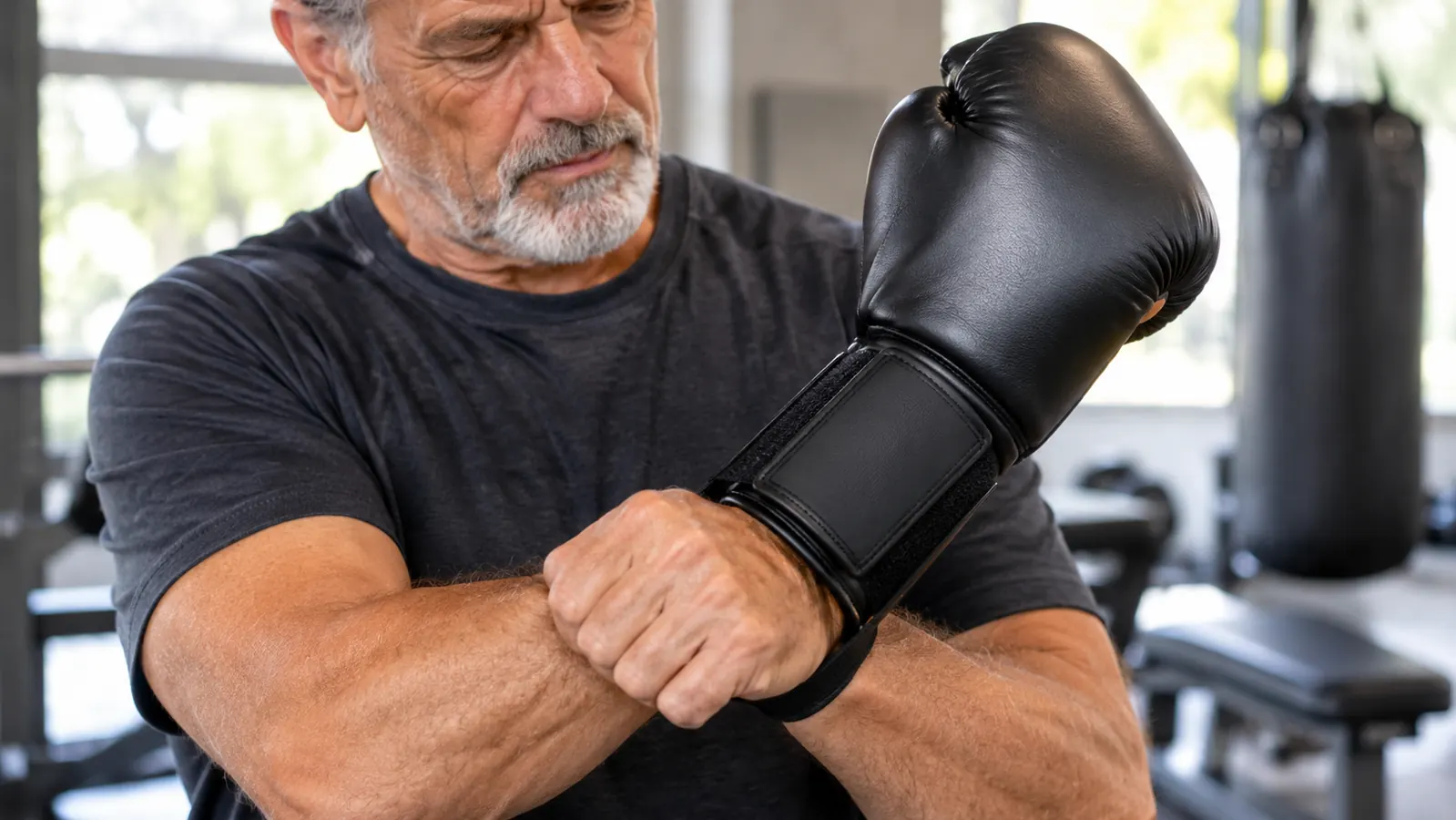
About fourteen months ago I bought a pair of RDX boxing gloves for myself. The Maya Hide model, 18 oz, hook-and-loop strap. I wanted a glove for my own bag work that I did not have to think about, and I was tired of pulling something out of the loaner bin that smelled like someone else's worst Tuesday. These live on the garage rack. They do not get lent out. I use them four to five mornings a week on the heavy bag and in Tuesday and Thursday adult kickboxing class.
Here is what nobody tells a beginner. The glove does not need to feel soft. It needs to let your hand close. These have a pre-curved shape, and the first time I put them on I noticed the fist was already there. I was not fighting the glove to make it. Three rounds in, my forearms were tired from punching, not from squeezing.
The strap matters more than I expected. Full wraparound, hook-and-loop, no laces, so a student can get in and out of them alone. In a class of twenty, that saves five minutes and it saves wrists. When I set mine down on the bag, my wrist sits still.
The palm is ventilated. My garage is a two-car space with foam mats and a hanging bag, and it is hot by June. Ventilation does not make a glove dry. It makes one dry faster on the rack, which only helps if you actually hang it up. I have watched more gloves die from a night in a closed bag than from any punch.
Sizing is where I see the most mistakes. Adults buy what sounds serious instead of what matches their weight and what they are hitting. An 18 oz glove is a training glove, built for long rounds on a bag, not for looking quick. Buying heavy and buying early is the same mistake twice.
The glove does not need to feel soft. It needs to let your hand close.
The pair I stopped thinking about around month two
Maya Hide, pre-curved shape, full wraparound hook-and-loop strap, ventilated palm. The 18 oz is the training weight I use on the bag. Size down if you are lighter or newer than I am.
Amazon Check Today's Price on Amazon →Now the honest part, because I have had these more than a year. The knuckle foam has softened. Not collapsed, not dead, softened, and it still protects well for bag work and pad work, which is most of what I use them for. For hard sparring, a glove past a year is worth watching. Mine are past a year.
The faux leather on the RDX gloves has aged better than the foam. There are scuffs across the knuckles from the bag and the seams have not opened. That is the whole of my maintenance: air them out on the rack after every session, wipe them down when they get grimy. That is it.
Weight is worth talking about. Mine are 18 oz, which the listing puts at about 1.04 kg. That is a lot of glove on your hand. It is why I use them for bag and pad work and not for anything fast. A lighter beginner should not start in 18 oz, and I would not hand my own pair to a new student even if they asked.
Which is the point. New students at my club use a separate, cheaper, unbranded set of club gloves, never my RDX pair. Those loaners are what a new person is actually comparing against, not a boutique brand they have never heard of. On that comparison the difference shows up in round two, when the loaner pair starts sliding on the wrist and the padding leaves a dull ache across the knuckles.
I have also had students try other gloves on. A Venum Challenger on somebody else's hands felt fine, no complaints, but I never wore one for a month, so I will not pretend to know how it ages. I know how mine aged because I was there for all of it.
My son Mateo is twelve and takes the kids class. He is not in these gloves and will not be for years. Kids need smaller, lighter and cheaper, and they outgrow all three every season.
What I'd Tell You If We Were Sitting at My Kitchen Table
I would tell you that most people buy gloves too heavy and too late. Get the weight that matches your body and what you are hitting, not the one that sounds serious, and get it before your first class rather than after your hands have already told you. I would tell you to hang them up after every session, because a glove that stays in a bag stays damp, and a damp glove smells by week three. And I would tell you that the RDX pair has been a good glove for me for fourteen months, that the foam is softening the way foam does, that the seams and the strap are still sound, and that I will likely buy another pair when these are finished. That is the whole of it. There is no version of this where a glove fixes your hook. It only stops your hands from being the reason you quit.
If you are going to buy one pair, buy the one that lets you make a fist
Fourteen months of garage bag work and it is still doing the job. Check the sizes and today's price before you settle on a weight.
Amazon See Sizes and Today's Price on Amazon →