
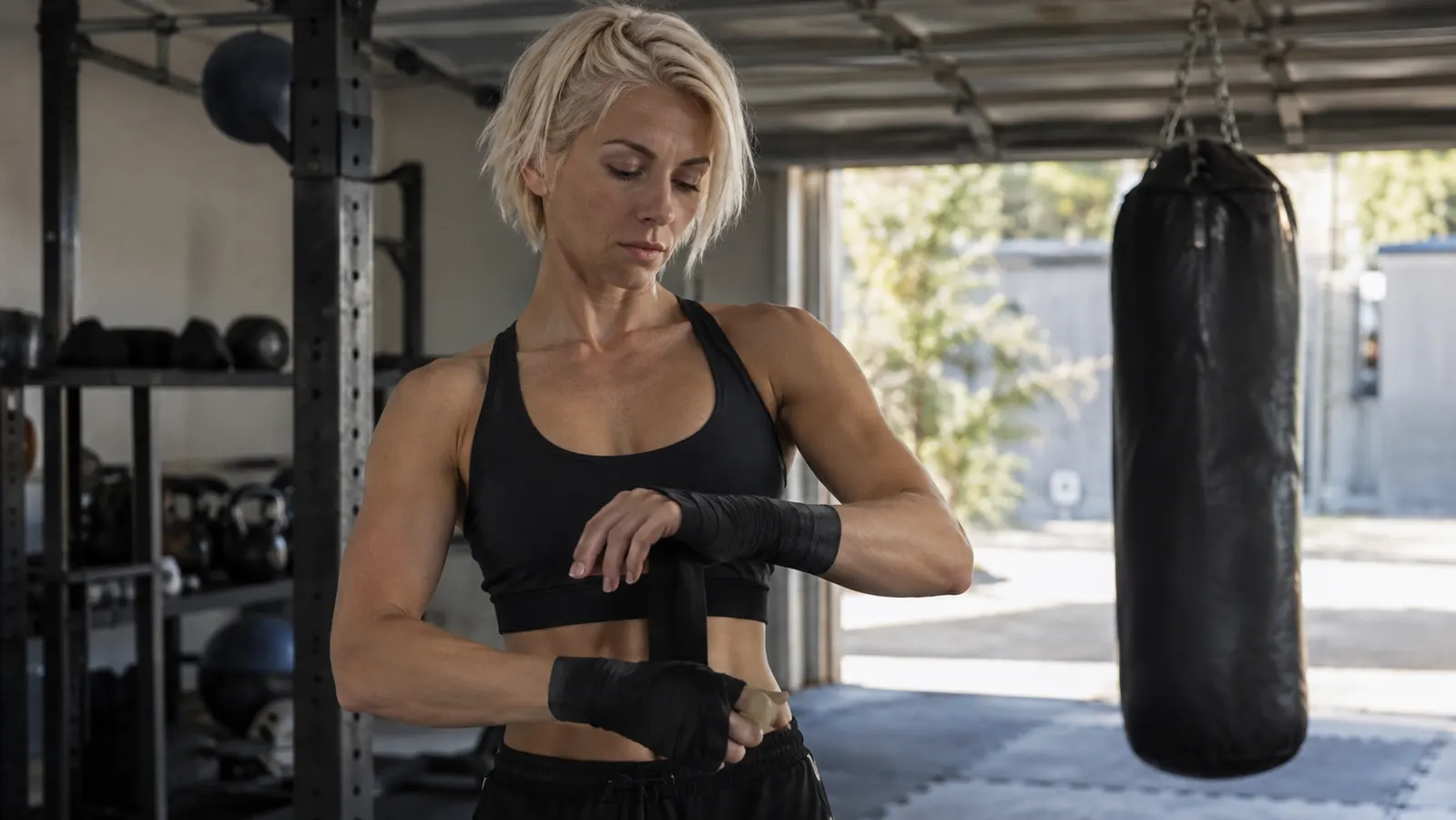
Every January a few new adults walk into my club in Columbus and ask whether boxing gloves actually matter. They have wraps, they have a plan, and they suspect the gloves are the expensive part. Then they spend six minutes on the heavy bag in the loaner pair and the question answers itself.
I run a small kickboxing and Brazilian jiu-jitsu club out of a converted warehouse unit, about 40 adults and 20 kids a week. I bought a pair of RDX boxing gloves in 18 oz roughly 14 months ago and have used them four to five mornings a week on the bag in my garage, plus Tuesday and Thursday adult class. My hands are the only pair I get, so I pay attention to what sits between them and the bag. Here are ten reasons that attention is worth it, in the order I would explain it to a new student.
The pair that has been through 14 months of Tuesday and Thursday class
My own gloves are the RDX 18 oz in Maya Hide faux leather: layered padding, a pre-curved fist shape and full wraparound wrist support. The line runs from 8 to 18 oz, so pick the weight for the person and the work.
Amazon Check Today's Price on Amazon →The foam spreads the impact across the whole knuckle line
A punch lands on a small area. Bare knuckles, or thin gloves, push that force into one or two spots on the hand. The RDX pair is built around a pre-curved anatomical structure that dissipates the force of impact across the padded surface instead of concentrating it. You feel it on a heavy bag inside the first round: the sound is dull and the pressure is spread out rather than sharp. That sharpness is what becomes soreness the next morning, and soreness is what makes you skip a session.
A pre-curved shape means you stop fighting the glove to make a fist
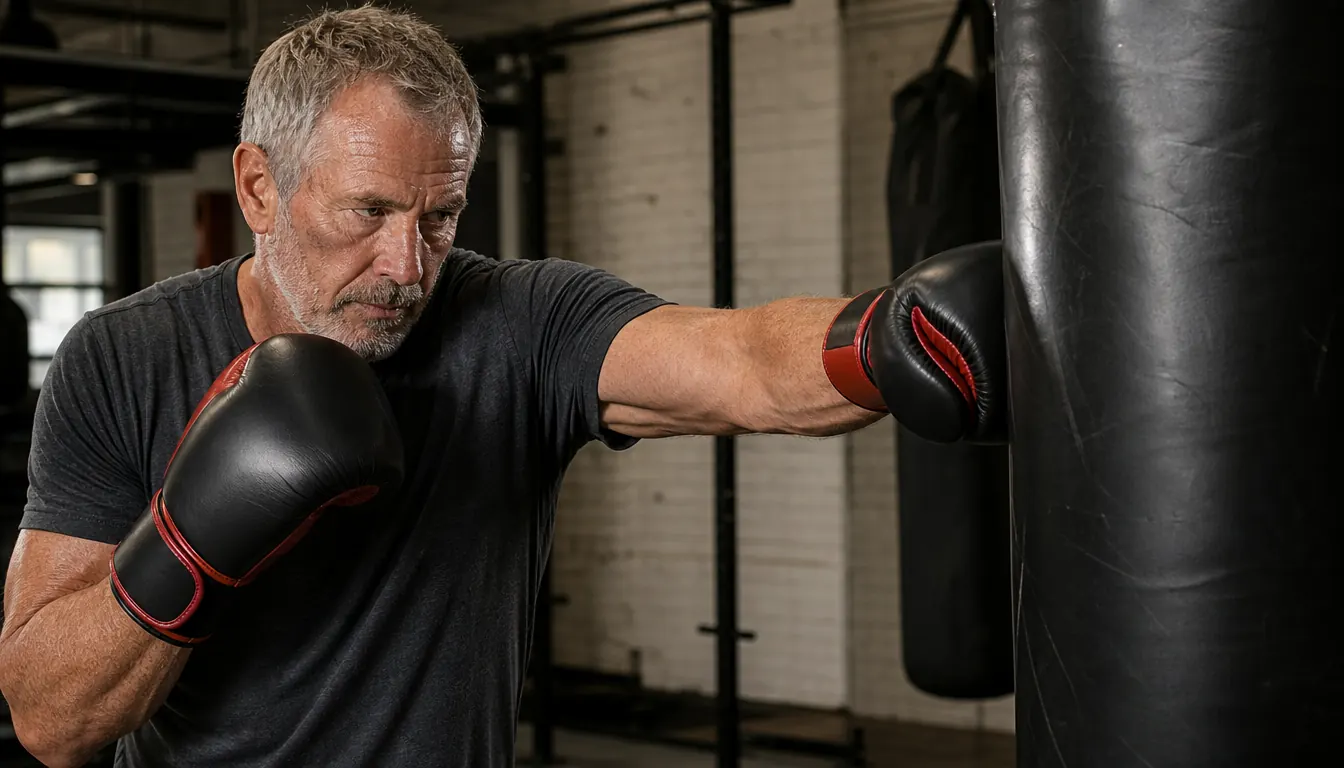
The patent pending LOMA Tech design in these gloves is about forming the fist. Anyone who has worn a stiff glove knows the fight: you squeeze, the glove pushes back, and your hand ends up half closed at the moment of contact. A pre-curved glove meets your fingers where they already want to go. I noticed it most on hooks, where a loose fist rolls and catches the bag at a bad angle and sends a jolt through the small knuckles.
Wrist support takes the jolt off your forearm
Full wraparound wrist support sounds like a label until you catch a bag at a slight angle. Then the glove rotates, your wrist bends, and the shock runs up the forearm to the elbow. A glove that wraps the wrist properly keeps the hand in line with the arm behind it. I am 44 with an old knee injury and enough years on my hands to be careful, so the wrist wrap is now the first thing I check on any glove before I put it on.
The strap holds the glove still instead of letting it spin
On my pair the closure is a hook-and-loop strap. What matters is not the style of the strap but what it does: it locks the glove to the back of the hand so the padding stays where you put it. A loose glove migrates across the knuckles after twenty or thirty punches and you end up hitting with the thin edge of the padding. Tighten the strap before every round, not once before class.
Layered foam still protects in month twelve, not just week one
Multi layered padding and an exceptionally durable outer material are what stop a glove from flattening out in the first two months. Mine are 14 months in, four to five sessions a week. The knuckle foam has softened a little. It still protects well for bag and pad work, and I look it over more carefully before hard sparring, which I would do with any glove past a year old. That is normal life for a training glove, not a defect.
The right ounce weight protects more than the loudest label
The line runs 8 to 18 oz. My 18 oz pair suits a 185 lb adult doing bag work and partner drills, and the small sizes in the range are what the kids in our class wear. A glove that is too light for the work lets force through to the hand. A glove that is too heavy for a young or smaller shoulder tires the arm mid-round, the guard drops, and you catch the bag with the wrist instead of the knuckles.
A ventilated palm keeps the inside from turning into a problem
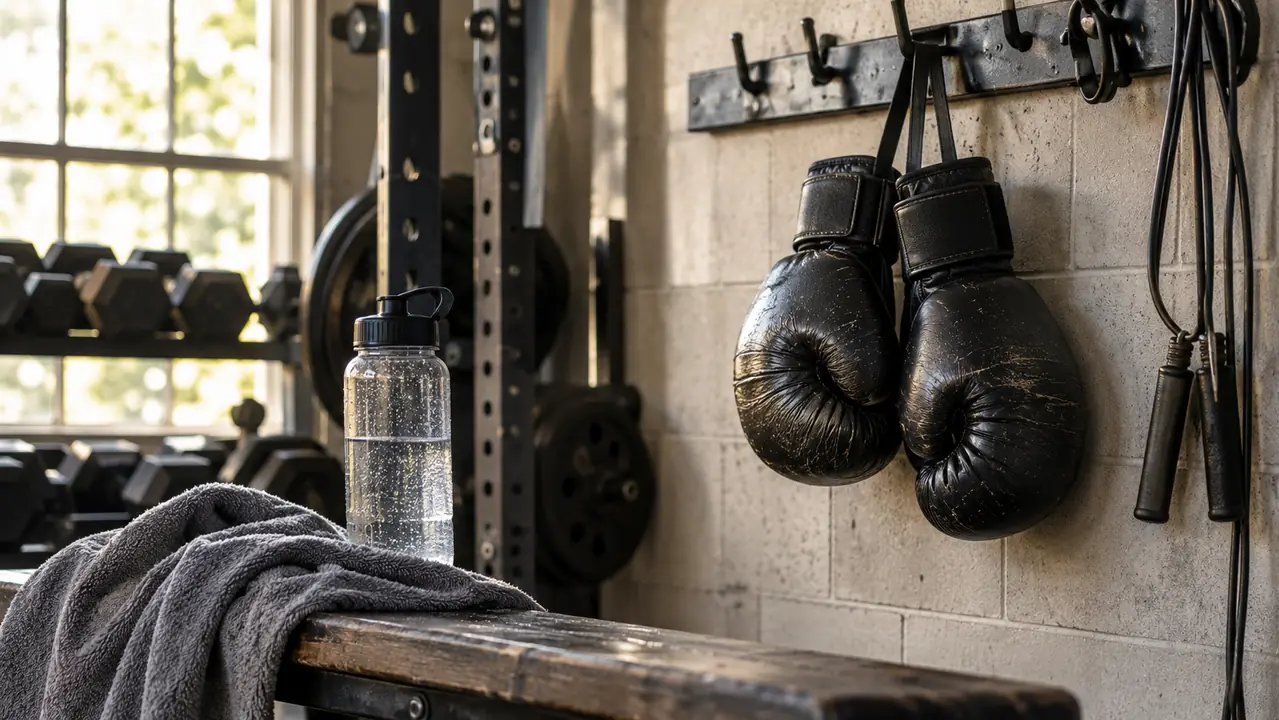
Gloves get wet from the inside out. A ventilated palm gives that moisture somewhere to go during the session, and you notice it at the end of one. Mine come out of the bag and go straight onto the rack in the garage to air. If you leave a damp glove sealed in a kit bag overnight, no feature on the label will rescue it. Air them after every session and wipe the liner out now and then.
Faux leather wipes clean and does not split at the crease
To be clear about what this is: the outer is Maya Hide, a faux leather, not animal hide. That suits me fine. It wipes down with a damp cloth, it does not soak up sweat the way some cloth shells do, and after 14 months the creases across the palm have not split open. I clean mine every couple of weeks and leave them to dry well away from heat.
They hold up on mitts, not just on the heavy bag
Bag work is repetitive and it punishes one spot. Mitt work is the opposite: the target moves, the angles change, and the glove takes hits on the back of the hand and along the cuff as often as the knuckles. My RDX pair has done both, plus partner drills, and the seams and cuff have held. A glove that only survives the bag is not a training glove, it is a bag glove.
Protection buys back your training frequency
This is the real reason on the list. I train four or five mornings a week before the club opens. If my hands were sore for two days after every bag session, that would become one or two sessions a week and my technique would stall. Good gloves are not a one-time purchase that saves your knuckles. They are what lets you keep showing up, which is the only thing in this sport that reliably works.
What I'd Skip
Skip anything sold on looks. A glove with a big graphic and thin padding is a costume, and you will find out on the bag. Skip the idea that one pair covers every job: the club loaner bin holds a cheaper unbranded set for people trying a first class, and I would not spar anyone in them.
Skip buying above your weight class in the hope that more padding means more protection, because a heavy glove on a tired shoulder drops and you catch the bag with your wrist. And skip hitting anything without wraps. The wrap and the glove work together, and the glove cannot fix a hand that was never supported underneath.
Fourteen months of bag work and the knuckle foam has softened a little. It still protects. That is the whole argument for caring what sits between your hand and the bag.
Buy the weight you will actually train in, not the one that looks toughest
For an adult doing bag, mitt and partner work, that is usually the heavier end of the range. The glove is the part you can control. Everything after is recovery time.
Amazon Check Today's Price on Amazon →