

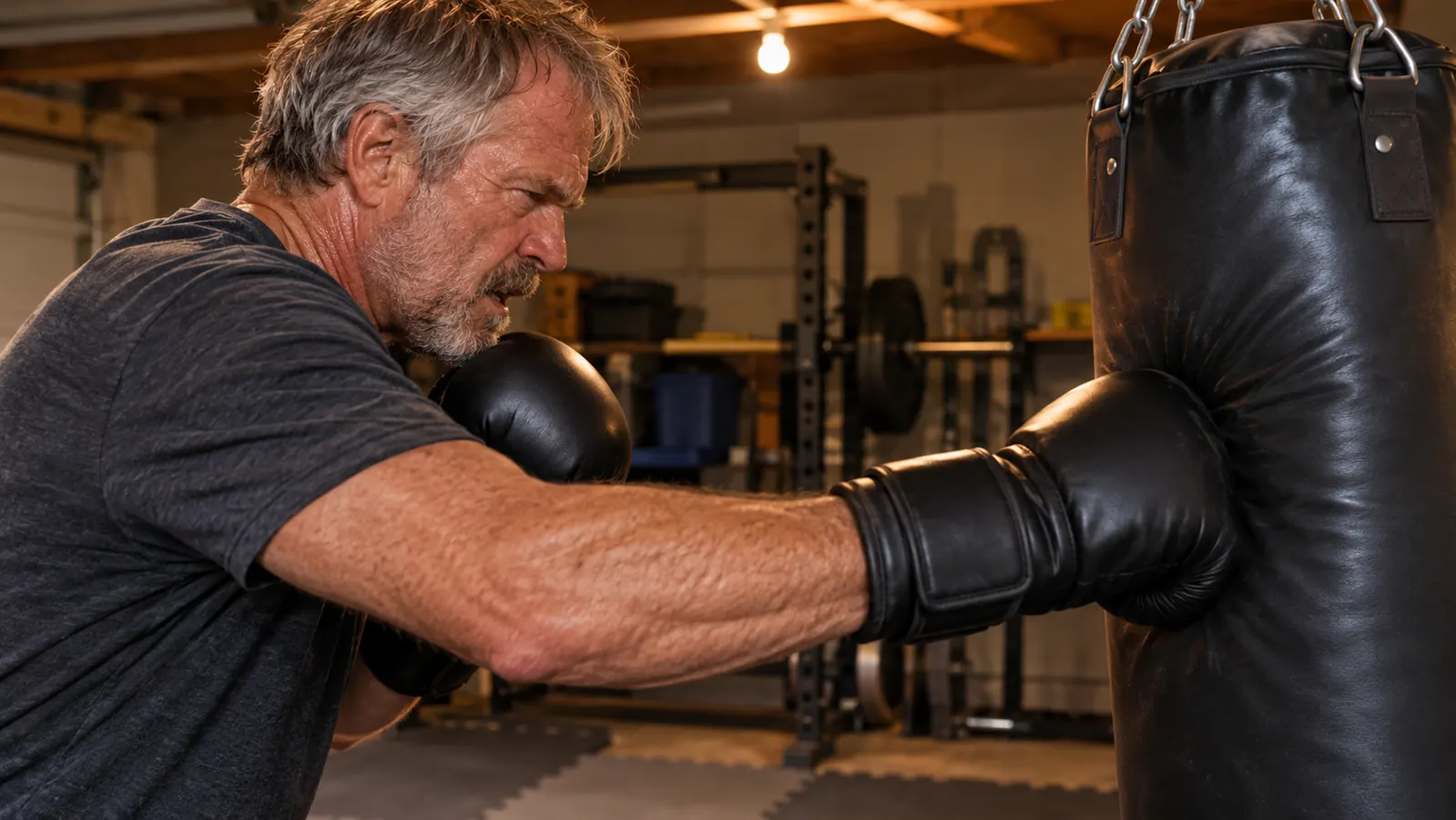
Fourteen months ago I bought a pair of RDX boxing gloves for my own training, mostly because my knuckles were sore every Sunday morning and I was tired of pretending they weren't. I run a small mixed martial arts club in Columbus, Ohio, roughly 40 adults and 20 kids across kickboxing and jiu-jitsu classes, and I do my own work in a two-car garage before the doors open. I am 44, about 185 lbs, and I have been hitting a heavy bag since my twenties. I wanted a glove I could put on five mornings a week without thinking about it.
What I did not want was another pair that feels fine for two months and then starts pinching across the knuckles. The club loaner bin is full of those. So I kept notes on and off for over a year. How the foam felt on the bag. Whether the wrist strap still held. Whether the lining dried out between sessions or started to smell like a locker room floor. Here is what I found, including the parts that are not flattering.
The Quick Verdict
A stiff, well-padded 18 oz training glove that has kept its shape through 14 months of bag work and class drills. The break-in took longer than I expected, the knuckle foam has noticeably softened past the year mark, and I would not put them on for hard sparring going into year two.
Amazon Check Today's Price →The Pair I Put On Before I Put On Anything Else
Maya Hide faux leather, multi-layer knuckle padding, pre-curved fist shape, ventilated palm, full wraparound wrist strap, 18 oz. Fourteen months of morning bag work and Tuesday and Thursday class drills, and they are still my first choice for pad work.
Amazon Check Today's Price on Amazon →How I've Used It
My training week runs four to five mornings on the garage bag, plus Tuesday and Thursday adult kickboxing class, where I hold pads and drill combinations with partners. That works out to somewhere between five and seven hours of glove time a week, most weeks, for 14 months. Every single one of those hours was in the same pair. I did not rotate them with anything.
They are mine and they stay mine. The club keeps a separate, cheaper set of unbranded gloves in the loaner bin for new students, and I have never dropped the RDX pair in there. That matters for a review like this, because a glove worn by 30 different people tells you nothing about how one pair ages. You need a single owner, a consistent routine, and a long stretch of time.
After every session I hang them on the wall rack in the garage with the cuffs open to the air. Columbus summers are humid and my garage is not climate controlled, so drying is half of glove maintenance. Fourteen months in, they have never developed a smell I could not clear with that routine plus a wipe of the lining with a damp cloth. I also never leave them in the minivan overnight in July, which I learned the hard way with an older pair.
One thing to know up front: I wear hand wraps under them, always. I have never rated a glove on bare-knuckle comfort and I am not going to start now, because that is not how anyone trains. The wraps do more work than the glove does. If you skip them, you are reviewing a different product than the one I used.
What the Build Actually Is
The shell is Maya Hide, which is RDX's name for a faux leather. It is not leather, and I would not describe it as leather no matter what the listing photos imply. What it is, is a synthetic shell that has not cracked, split, or gone shiny at the flex points after a year of daily flexion. On cheap gloves, the crease where the wrist meets the back of the hand is always where it starts. That crease on my pair still looks like a glove.
The padding is multi-layered and the glove is built pre-curved, so your hand sits in a fist shape rather than flat. RDX calls part of this the LOMA TECH design, patent pending, and the stated aim is that you form a proper fist without fighting the glove to get there. In practice, that pre-curve is the single most noticeable thing about putting them on. For the first two or three weeks it felt like the glove was molding my hand rather than the other way around. Then it stopped being noticeable, which is exactly the point. A glove that keeps announcing itself is a glove that does not fit.
The palm is ventilated, which is the one feature I did not expect to care about and now do. Heat gets out during a long pad round. It is not a cooling system and I would not describe it as one. It is a set of openings in the right place, and on a humid July morning in a garage that is enough to notice. Compare that to the loaner gloves, which turn into a swamp by round three.
Wrist support is a full wraparound strap with a hook-and-loop closure. I have a cranky left wrist from fifteen years of holding pads badly, and I snug that strap down hard every session. It has not slipped mid-round, and the closure still grabs firmly after 14 months of being pulled tight four or five times a week. The wrist support is the second thing I would point to after the pre-curve, and it is the reason I trust these on a heavy bag more than I trust most training gloves in this range.
The listing puts the item weight at 1.04 kg and the size at 18 oz. These are not light gloves. By the end of a long round you will feel that in your shoulders. That is a training tradeoff, not a defect, and I will come back to it in a minute.
On the Faux Leather, Care, and the Stuff Nobody Mentions
People ask whether faux leather is a downgrade. For a training glove at this level, I do not think it is the deciding factor. What matters is whether the shell survives repeated flexion without splitting, and whether it stays grippy enough at the wrist that the strap does not slide. My pair has done both. Would a real leather glove age more gracefully over five years? Probably. But I am not keeping a training glove for five years, because the foam goes long before the shell does.
Care is simple and I would not complicate it. Wipe the outside with a damp cloth when it looks chalky, air them out with the cuffs open, and do not cook them in a hot car or a dryer. I left an older pair in the back of the Odyssey on a 95 degree afternoon once and the shell went stiff at the crease and never really came back. That was my fault, not the glove's.
The interior lining has held up better than I expected. No tears at the heel of the hand, no balling up where the wraps rub, no hot spots. That said, the inside is where a glove fails quietly. If you start feeling a seam against the back of your knuckles, that is the beginning of the end. I check mine every few weeks with my hand inside and my fingers spread.
How They've Held Up Over 14 Months
The honest answer is that the knuckle foam has softened. Not collapsed. Softened. On the heavy bag and on pads it still protects well, and I do not come away with sore hands the way I did with the loaner gloves. But I can feel the difference between where they are now and how they felt at month three, and that difference is the reason I would think twice about using this exact pair for hard sparring as they move into year two.
I am not going to give you a percentage of compression, because I did not measure it and anyone who does is guessing. What I can give you is a direction. A glove past a year of five-day-a-week use is worth watching, not automatically worth replacing. Watch it. Keep it for bag work and pad work. Put the hard rounds on a fresher pair if you have one, and if you do not, be honest with yourself about how much padding is left between your knuckles and someone else's skull.
The rest of the build has held better than the foam. Stitching at the thumb and along the palm seam is intact. The wrist strap closure still holds. The lining has not torn or balled up. The shell at the wrist crease still looks like a glove and not a raisin. The thumb attachment has not stretched out, which matters more than people think, because a stretched thumb catches on collars and shoulders during clinch work and gets you hurt.
Given how much of my class time is spent in a clinch, I would have noticed that. I have had gloves where the thumb went floppy by month eight. This pair has not done it.
On the Bag vs In Class
On a heavy bag, these are very good. The pre-curve and the padding stack mean you can hit a bag at full effort without the knuckle soreness that ends a lot of cheap gloves early. Four or five rounds on the garage bag and my hands are fine on the drive to the club.
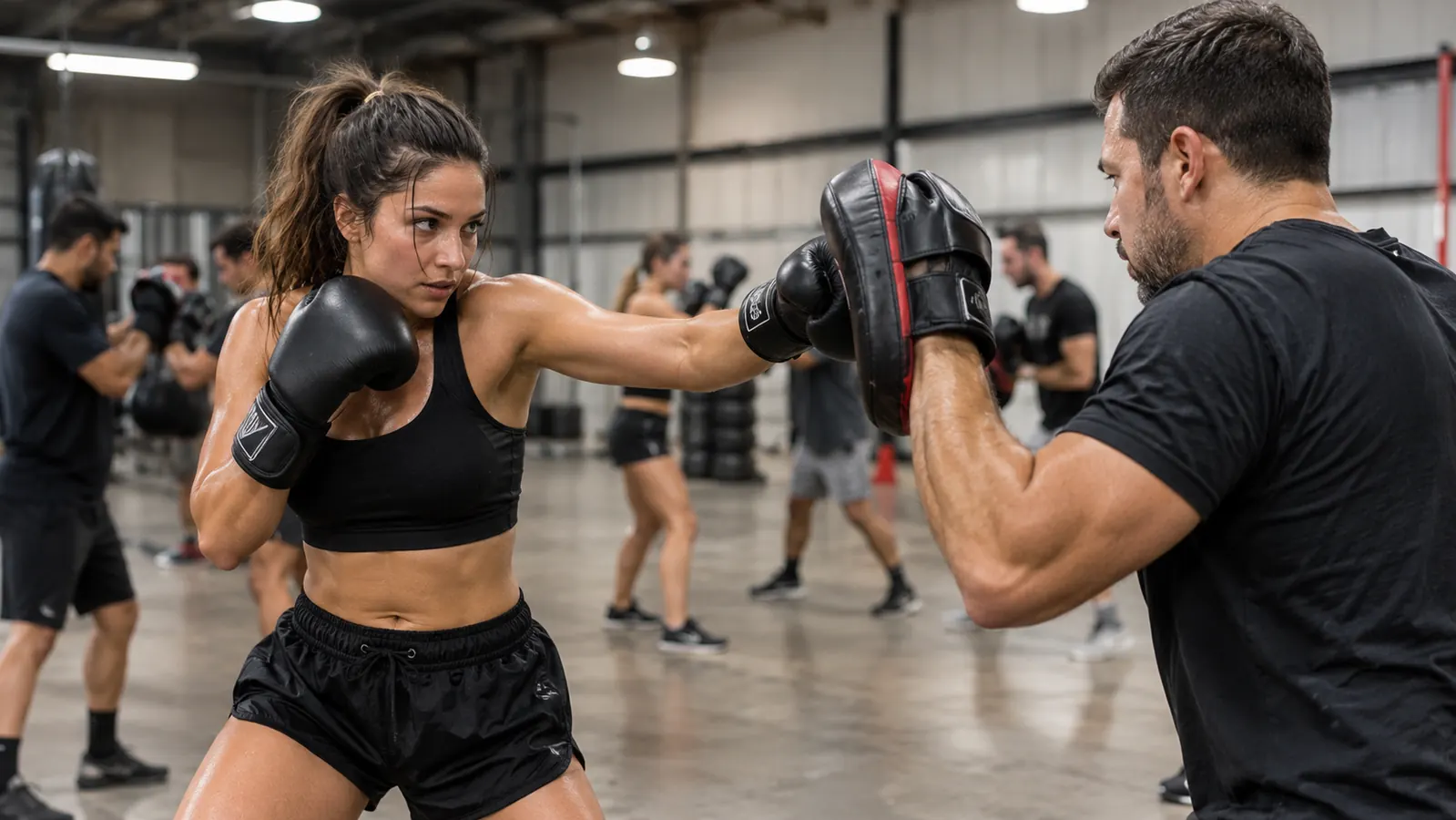
On pads, they are also good, with a caveat. At 18 oz they are heavy for fast, long combination work. If you are doing focus mitt drills for 45 minutes straight, your shoulders will know about it. I use them for pad work anyway, because I would rather train my shoulders than my ego, but a 14 or 16 oz glove is the more sensible choice for most people who spend their sessions on mitts.
In partner drills at the club, they are fine. They are a training glove, and that is what the listing calls them. Where I get cautious is hard sparring. Not because they are unsafe, but because a 14-month-old glove has softened knuckle foam, and hard sparring is exactly the situation where you want fresh padding between your knuckles and another person's head. A coach telling you his old gloves are fine for sparring is a coach you should not listen to.
When I hold pads for students, I usually have these on. The wrist support and the padding take the sting out of catching a hard right hand or a shin, and they protect my hands while I am the one absorbing everyone else's work.
Where They Fall Short
Break-in is real. The pre-curve plus a stiff multi-layer stack means the first two or three weeks are work. If you are buying these the week before a grading, a seminar, or a first smoker, you will spend that week fighting the glove instead of training in it.
Sizing is not a place to guess. I am an average-sized adult male with average hands and 18 oz fits with wraps underneath. If you have long fingers or a wide palm, try before you commit if you possibly can. If you cannot, use the size chart and be honest with yourself about your hand size instead of buying the size your ego wants.
The weight is a limitation, and it is the one I hear about most from students who tried a heavier glove and hated it. If you are doing speed work, or you are a smaller person, 18 oz will slow your hands down and tire your shoulders. That is not a fault in the glove. It is a mismatch between the glove and the job you are asking it to do.
What I Liked
- Pre-curved shape closes a real fist without you fighting it
- Multi-layer padding protected my knuckles through 14 months of bag work
- Ventilated palm makes a humid garage session bearable instead of miserable
- Wraparound wrist strap still closes firmly after daily use
- Stitching, thumb attachment, and shell have held where cheap faux leather usually fails
Where It Falls Short
- Two to three weeks of break-in before they feel like yours
- Knuckle foam has noticeably softened past the year mark
- 18 oz is heavy for long pad rounds and speed work
- Not a pair I would wear for hard sparring in year two
- Sizing is unforgiving if you guess
Fourteen months, four to five mornings a week. The stitching at the thumb and the palm seam has not given. The knuckle foam has softened. That is the whole story of a training glove, and this one tells it slowly.
Who This Is For
This is for the adult who trains two to five times a week and wants one pair that covers bag work, pad work, and class drills without rotating gear. If you do kickboxing or Muay Thai and you want a padded, wrist-supportive glove that will take a year of honest use, this is a sensible buy. The 18 oz suits a heavier adult wearing wraps underneath. If you are smaller, or most of your time is on mitts, size down to 14 or 16.
It is also a good choice for a coach or a pad holder, because the wrist support and the padding stack take the sting out of catching shots all evening. And it is a reasonable second pair for someone who already has a sparring glove and wants something dedicated to bag and pad work.
Who Should Skip It
Skip it if you spar hard and you need a glove you can trust in round one and again in 14 months. Buy fresh, keep that pair for sparring only, and accept that foam is a consumable, not a permanent feature. Skip it if you want a light, fast glove for speed work, or if this is your first pair and you have small hands and nobody to check the fit for you.
Also skip it if the break-in costs you something real. If you have a grading or a smoker in three weeks, buy the pair you can wear now, not the pair you have to break in. Come back to these when you have a month of ordinary training ahead of you and no deadline attached.
Fourteen Months In, Still the First Pair I Grab at 6 AM
Maya Hide faux leather, multi-layer knuckle padding, pre-curved fist shape, ventilated palm, full wraparound wrist strap with hook-and-loop closure, 18 oz. Honest about the break-in and honest about the foam past a year, and still the glove I reach for on a Tuesday morning in the garage.
Amazon Check Today's Price on Amazon →