
The question I get most often at the club is not about brands. It is about size. A 210 lb man buys 16 oz gloves because a chart on a product page told him to, then spends a month wondering why his hands ache after pad rounds. A 130 lb woman buys 12 oz for sparring and gets asked, politely, to borrow something heavier from the loaner bin.
Glove weight is not a measurement of how big your hands are. It is a measurement of how much padding sits in front of your knuckles, which means it is really a measurement of what you are asking the glove to do. Two people with identical hands can need different weights. One person can need different weights on different days. My own pair is an 18 oz RDX glove in Maya Hide faux leather that I bought about 14 months ago for bag work and partner drills. I did not arrive at 18 oz by tracing my hand on paper.
One build, six weights, so you can size to the job instead of guessing
The RDX glove comes in 8, 10, 12, 14, 16 and 18 oz in the same Maya Hide faux leather shell, with multi-layered knuckle padding, a ventilated palm and full wraparound wrist support.
Amazon See sizes and today's price on Amazon →Step 1: Start With Bodyweight, Not Hand Size
Every size chart you will find is built on bodyweight, and that is not laziness. Padding thickness has to scale with the mass behind the punch. A 110 lb teenager and a 200 lb adult can throw the same technique and the force arriving at the knuckles is nowhere close. The lighter person needs less foam to stay safe on a bag. The heavier person needs more, or the padding collapses under the impact and the hand takes the rest of it.
The ranges I hand out at the club, for adults: under about 120 lbs, 8 or 10 oz for bag and pad work, stepping to 12 oz when they start controlled sparring. Between 120 and 150 lbs, 10 or 12 oz for the bag, 14 oz for sparring. Between 150 and 180 lbs, 12 or 14 oz for the bag, 16 oz for sparring. Above 180 lbs, 14 or 16 oz for the bag, 16 or 18 oz for sparring. If you land right on a boundary, take the heavier glove. Nobody has ever been hurt by having slightly too much padding in front of their hand.
Two things override that. First, your gym's rules. Plenty of clubs set a minimum sparring weight, usually 16 oz for adults, and it does not matter what your bodyweight says. Second, your hands. A person with long fingers can feel cramped in a glove the chart says is correct, and a person with a thick palm can find the wrist strap does not close the way it should. The chart gets you to a shortlist. It does not pick the glove.
Step 2: Match the Weight to the Job, Not to the Person
Bag work, focus mitts, sparring and competition are four different problems wearing the same shape. On a heavy bag you want to throw volume, and the bag does not care how hard you hit it. On mitts you want accuracy and speed. In sparring you want your partner to be able to go to work the next morning. Those goals pull in opposite directions, which is why one glove cannot be the best answer to all four.
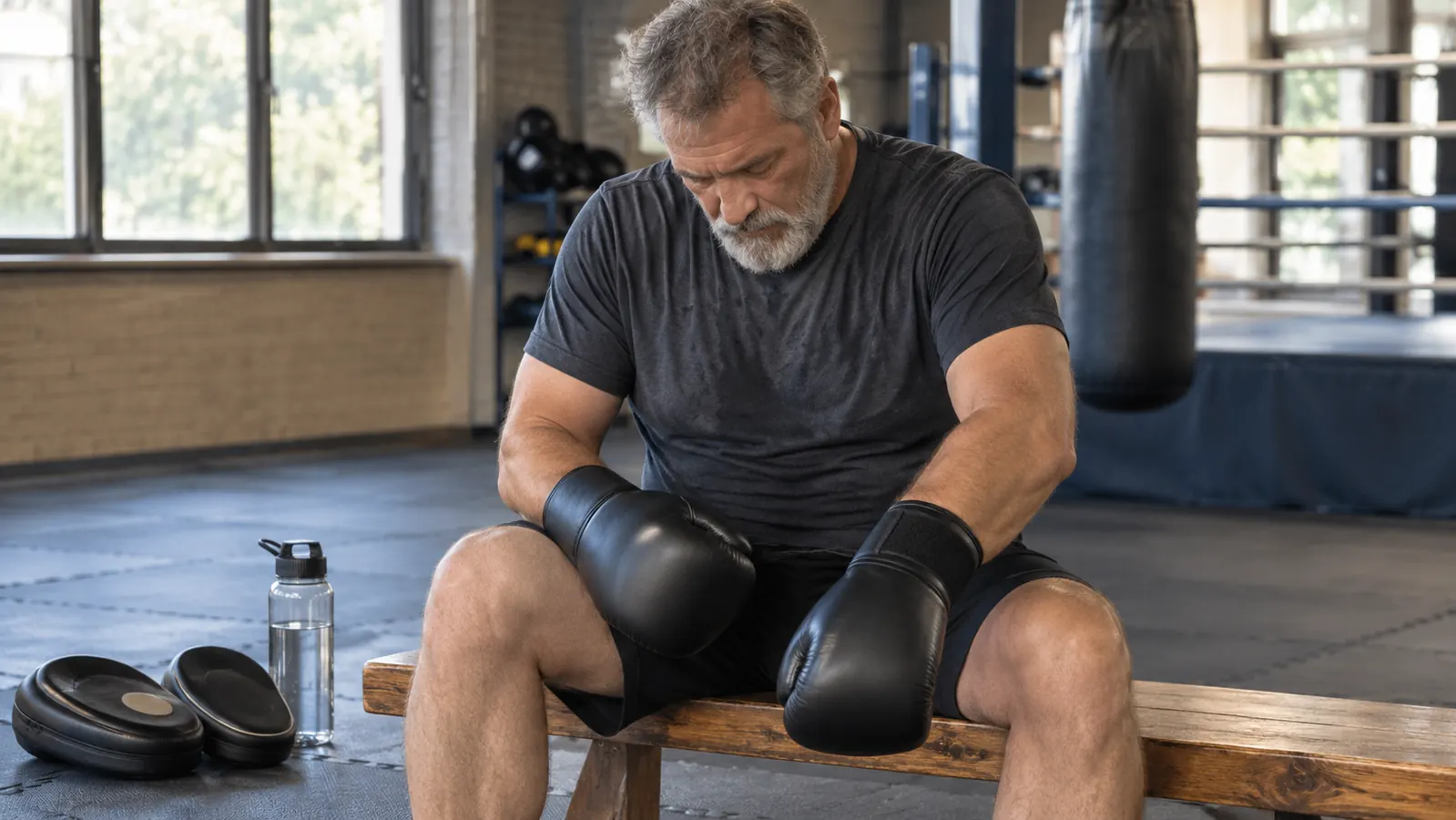
For bag and pad work I go lighter than most people expect. 12 to 14 oz is plenty for a heavy bag session, and it lets you keep your hands up in round six instead of dropping them because the gloves feel like anchors. Sparring is the opposite. 16 oz is the standard for most adult sparring, and heavier people should be in 18. The extra foam is not for you. It is for the person standing in front of you.
The mistake I see most is buying one pair of 16 oz gloves and using them for everything. It works, in the sense that you can train. It is also why people complain that their shoulders are shot after a bag session and that their sparring partners say they are getting hit too hard. The 18 oz RDX pair I own is my bag and partner drill glove. It is heavier than it needs to be for a bag, and I accept that, because I would rather train one weight consistently than chase a perfect number twice.
Step 3: Check the Fit Inside the Glove, Not Just the Number on the Cuff
Once you have two or three weights to choose from, fit decides it. Put the glove on with your wraps on, the way you will actually wear it. Make a fist. Your knuckles should be sitting against the padding, not floating half an inch behind it, and your fingertips should not be pressing into the end of the compartment. If you can feel the end of the glove with your middle finger, the hand compartment is too short, no matter what the label says.
Thumb position matters more than people think. A thumb that sits too far forward gets bent backward on a hook. RDX builds this glove around a pre-curved anatomical shape, and the patent pending LOMA tech design is aimed at the same complaint, which is that a relaxed hand does not naturally close into a fist inside a padded shell. What that gives you in practice is less work to hold your hand in the right position, and a fist that is already formed when the punch lands.
Then the wrist. A glove with a loose wrist lets your hand move inside the shell, and that is where a lot of wrist soreness comes from after a hard session. The full wraparound support on this pair closes across the back of the wrist and holds it in line with the forearm. Get the strap snug enough that you can still make a fist without the glove pulling. If you are between two weights and the smaller one pinches across the back of the hand, take the larger one and tighten the strap down.
After 14 months of four or five mornings a week, the knuckle foam on my 18 oz pair has softened. It still protects fine for bag and pad work. For hard sparring, a glove past a year is worth watching, not throwing out.
Step 4: Read the Build, Not the Badge on the Cuff
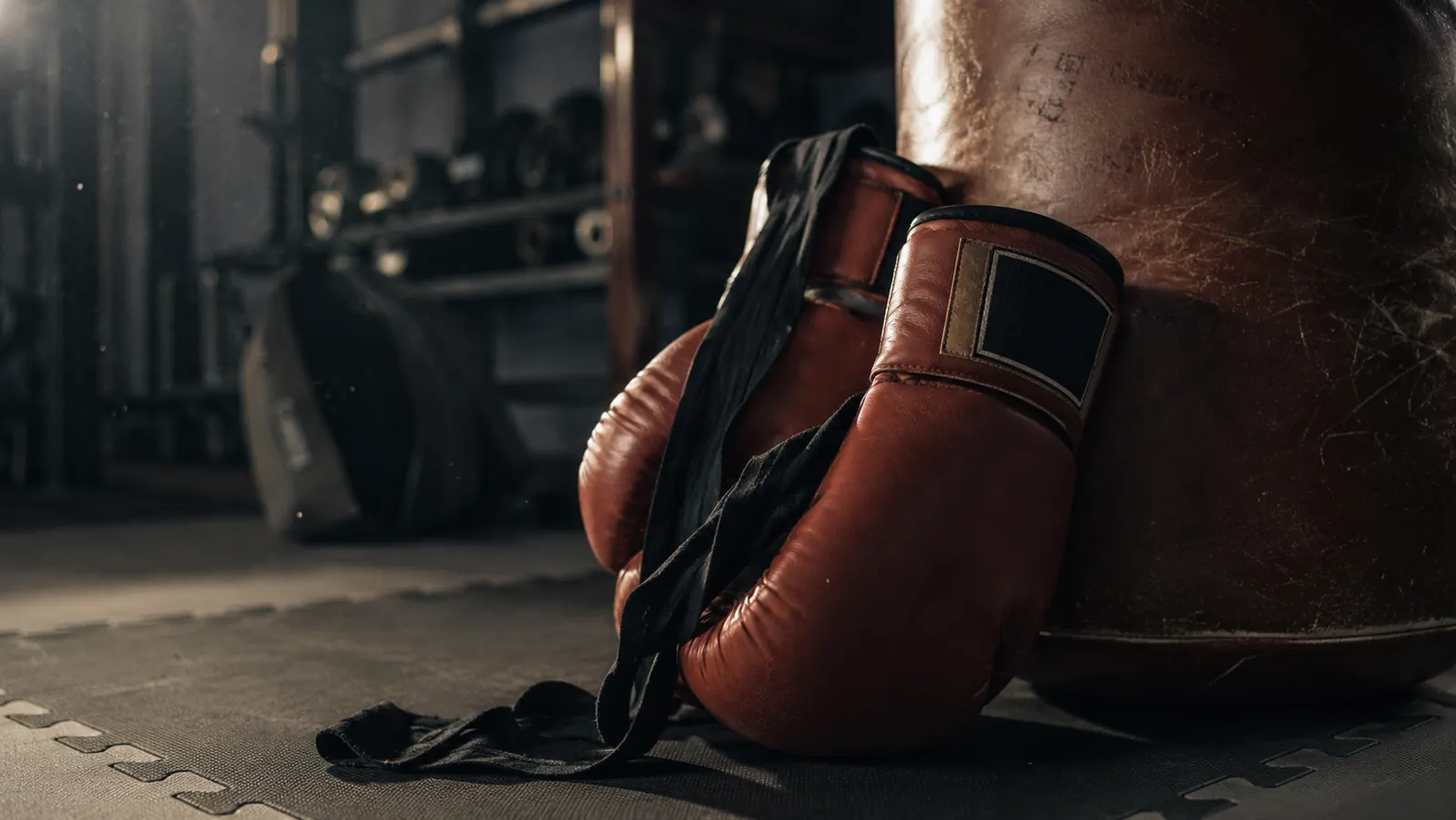
Gloves at the same weight are not the same glove. The foam stack is the difference. A single slab of foam feels fine in the shop and goes flat in a few months. Multi-layered foam uses a firmer layer against the knuckle and a softer layer behind it, so the impact spreads instead of concentrating in one spot. You cannot see this from the outside, which is why the honest version of this advice is to buy from a brand that states what is inside the glove, then pay attention to how it feels after 60 rounds and not six.
The shell material matters for a different reason. Maya Hide is a faux leather, not a real hide, and that is fine. Faux leather holds up to sweat and regular wiping, it does not need conditioning, and it does not crack the way cheap leather does when it dries out. What it does need is air. The ventilated palm on this pair is the part I notice most in July, when the garage is 88 degrees and the bag session is not getting any shorter. Gloves that trap everything inside end up smelling like a locker room by week three.
There is one more variable nobody puts on a chart. Glove weight is split between the shell and the foam, and different makers split it differently. Two 16 oz gloves from two brands can feel like different weights on your hand, because one carries more material in the cuff and the other puts it all in the knuckle. That is the reason to try a glove when you can, and the reason a review that only quotes the label is not much use to you.
Step 5: Break Them In, Then Watch for the Signs That They Are Done
New gloves are stiff, and the first two weeks are not the glove's fault. Wear them with wraps for short sessions first. Ten minutes of bag work, then take them off. Do that four or five times before you commit to a full hour. The foam needs to take the shape of your knuckles, and the wrist strap needs to learn where it closes on your arm. If a glove is still pinching across the back of the hand after two weeks of that, it is the wrong glove, not a break-in problem.
Care is basic and almost nobody does it. Take them off, wipe the inside with a damp cloth if you have been sweating hard, and hang them somewhere with air moving. Mine go on the wall rack in the garage after every session. They never go back into the gear bag wet. A pair treated that way will last years. A pair that lives in a closed bag in a warm car will smell bad long before the foam gives out, and no amount of spray fixes that once it has set in.
The harder question is when to stop using a glove. Foam does not fail suddenly. It softens gradually, and you adjust to it without noticing. My 18 oz pair is 14 months old and the knuckle padding has compressed enough that I can feel the difference when I put on a newer glove. It is still my bag glove. If I were sparring hard three times a week in it, I would be looking at a fresh pair or moving that glove to bag duty only. A glove is not worn out at a year. It is worth watching at a year.
Store them open, not stuffed into a bag with the strap done up. Air needs to move through the palm and the lining, and a glove closed up wet stays damp in the padding where you cannot see it. If yours already smell, wash the inside by hand with a little mild soap, rinse, and dry them open and away from direct heat. Do not sit them on a radiator. The foam does not like it, and you will feel the difference on the bag long before you see it.
What Else Helps
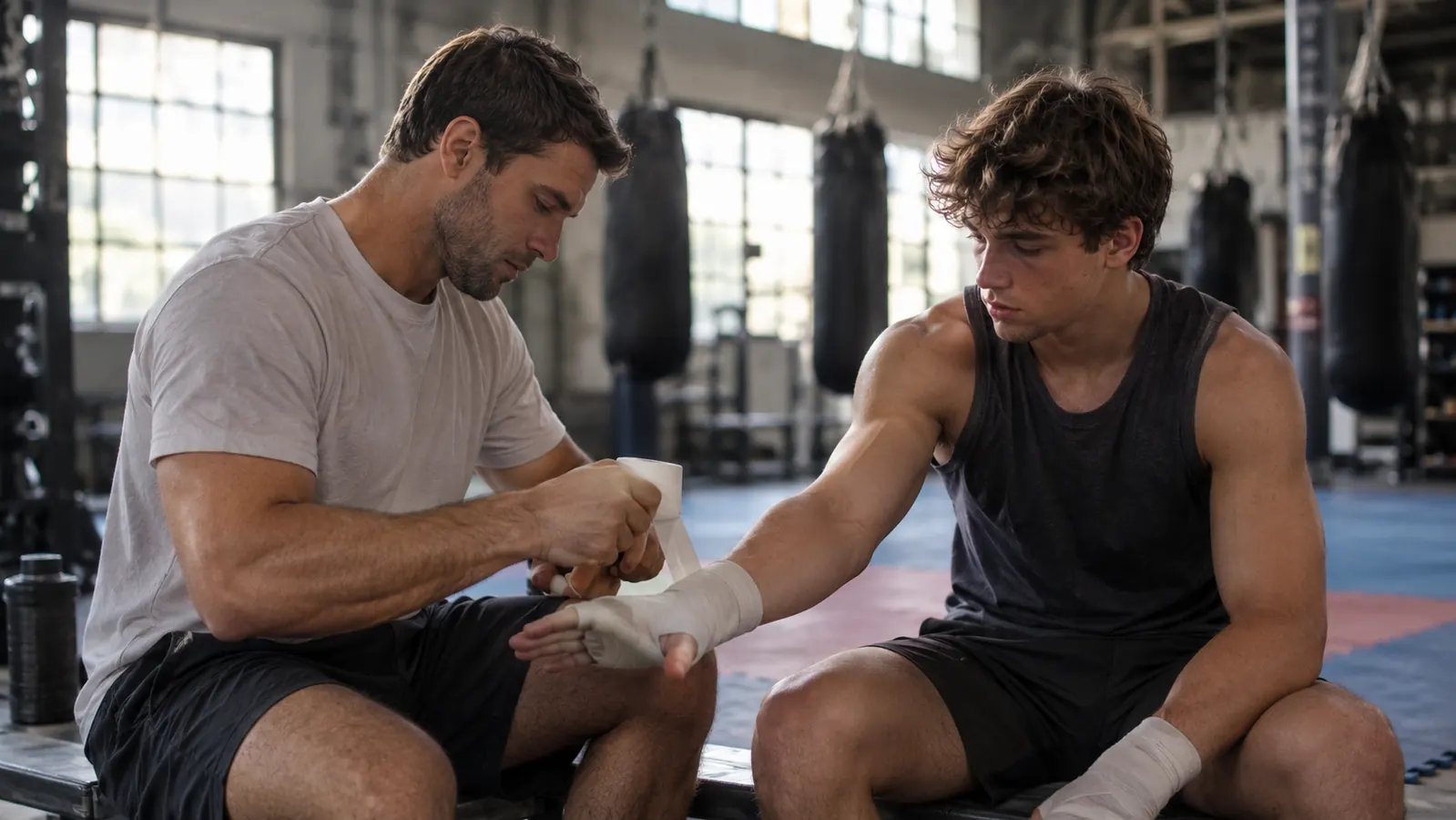
Hand wraps do more for your knuckles than a heavier glove will. 180 inch wraps for adults, done properly, keep the small bones of the hand together and fill the space inside the glove so your hand does not slide around. A lot of people buy 16 oz gloves to fix a hand pain problem that a correct wrap would have handled in a 12 oz glove. Learn to wrap before you spend anything on gear.
Ask your coach what the club's sparring minimum is, and ask whether they keep a loaner pair in the weight you are considering. Ten minutes in a borrowed glove tells you more than any chart. When I have a student deciding between 14 and 16, I hand them both and watch them hit pads for a round. The one they stop thinking about is the one they should buy.
The kids' class is its own calculation. My son is 12 and has been in the kids kickboxing class for a while now, and the rule there is simpler. They do not spar hard, so the glove needs to fit and stay on, not absorb a professional shot. A glove that is too big for a child is worse than one that is slightly small, because the hand slides inside it and the wrist rolls. Fit first, weight second, at that age.
Buy the weight you will use four mornings a week, not the one the chart picked for you
The RDX glove comes in 8, 10, 12, 14, 16 and 18 oz in the same Maya Hide build, with multi-layered knuckle padding, a ventilated palm and full wraparound wrist support. Size it to the work, then check the strap closes cleanly with your wraps on.
Amazon Check today's price on Amazon →