

Short answer: these are not two versions of the same product. The ProsourceFit 1/2-inch interlocking tiles are a floor covering. Thick jiu-jitsu mats are a landing surface. If your space is for footwork, bag rounds, stretching and light drilling, the tiles are the right buy and the thick mats are wasted money. If bodies are going to be thrown, swept and taken down in that space, the tiles are the wrong tool, and laying more of them does not turn them into the right one.
I coach kickboxing and Brazilian jiu-jitsu in Columbus, Ohio. Roughly 40 adults and 20 kids come through the club in a normal week. Two years ago I laid 24 of the ProsourceFit 24 by 24 inch tiles on the concrete of my two-car garage, about a 12 by 8 foot area, and they have not come up since. Every throw and takedown in my week happens at the club, on the thick mats. That split is what this comparison is really about.
| ProsourceFit 1/2-inch puzzle tiles | Thick jiu-jitsu mats | |
|---|---|---|
| Thickness | 1/2 inch, measured from the highest point of the texture | Usually 1 to 2 inches of foam under a vinyl skin |
| What it is for | Standing work: footwork, bag rounds, stretching, bodyweight | Falling work: throws, sweeps, takedowns, ground drills |
| Absorbing a fall | Bottoms out under a body landing on concrete | Built for exactly that impact |
| Comfort for bare feet and knees | Enough for drills and stance work | Enough for long ground sessions |
| Grip when sweaty | Gets slick once the surface is wet, needs a wipe between rounds | Textured vinyl holds up to sweat far better |
| Setup | Tiles press together by hand, no adhesive, under an hour | Heavy panels or rolls, two people and a van |
| Tear down and storage | Stacks in a corner or goes in the van | Stays where you put it, permanently |
| Weight | A 6-tile pack is listed at 5 pounds | Heavy enough that one person cannot shift a full mat alone |
| Cleaning | Wipe with a damp cloth, air dry, never soak | Wipes down with a proper mat cleaner |
| Seams under load | Puzzle teeth work loose under sideways pushing | Continuous roll or taped seam stays closed |
| Under a heavy bag | Fine, and it protects the concrete | Overkill, and you will never want to move it |
| Kids class | Works for footwork, games and pad rounds | Better if the kids are doing falls |
| Cost per square foot | Low | Several times higher |
How I Ended Up With Both
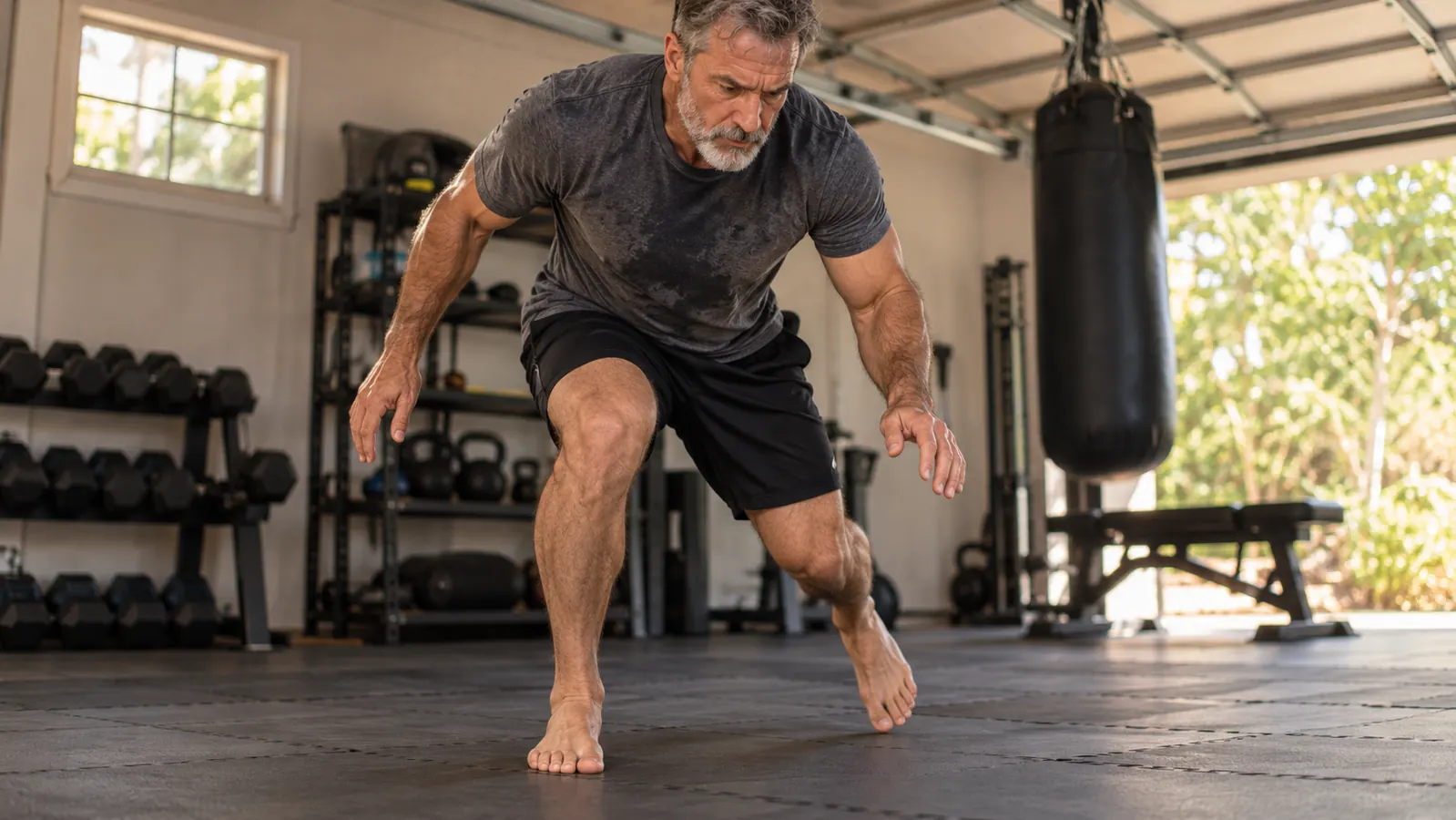
The garage sat bare for the first year. I hung the heavy bag, put up a wall rack for gear, and trained on concrete in wrestling shoes. My left knee has an old meniscus tear from competition and that floor let me know about it every single morning. The tiles fixed that, and they fixed it cheaply.
The first thing I tried cost nothing and worked like it. A member brought in a roll of dense carpet underlay and I taped it down at the corners over a 6 by 4 patch in front of the bag. It slid an inch or two every session. It bunched under my feet whenever I moved laterally. By the end of the second week it smelled like a bag left in a hot car, and I rolled it up and put it out with the bins. That is the whole reason the tiles appealed to me: they lock into each other instead of relying on tape and hope.
I put them down on a Saturday morning in March, two years back. Twenty four tiles, four packs of six, laid dry over a swept slab with no adhesive and no cutting at all. The garage was cold enough that the first row felt stiff and did not want to seat, and by the fourth row they had warmed up and were pressing together with a click I could feel through my hands. The end borders in the pack finished the outer edge clean. Warm enough to be barefoot in February. Quiet enough that I can train at 5:30 in the morning without waking the house.
The thick mats came later and for a different reason. Once adults are drilling throws, half an inch of foam over a slab is not a surface you can responsibly put a body on. So the club bought proper mats. Both purchases were correct. Neither one could have replaced the other.
Where ProsourceFit Wins
Setup and teardown, and it is not close. The tiles press together by hand and my whole 12 by 8 foot area went down in under an hour, including dragging the bag out of the way. The club mats took three of us, the Odyssey backed up to the door and most of an afternoon, and every panel needed two people to carry it flat so it did not fold. We started after the morning class and finished before the evening one and none of us wanted to touch them again. Nobody has. If your training space has to become a garage again on Monday, that difference matters more than every other row in the table.
Second, it covers concrete without pretending to be a mat. My floor is protected, my feet are warm, and the tiles take the scuff off a bag session. A 6-tile pack is listed at 5 pounds, so I carry a stack in from the van in one trip. When an edge tile gets chewed up, I replace a tile. You cannot replace a corner of a ten foot mat.
There is one benefit I did not expect and it shows up every January. Concrete pulls warmth out of your feet faster than you think it will. The foam insulates. On a morning when the garage is cold enough that I can see my breath, my feet are still fine, and that quietly changed how long I was willing to stay out there. Twenty minutes of footwork became forty.
Third, it handles the kind of load a kids class actually produces. Footwork ladders, stance work, pad rounds, games. That is exactly what this floor is good at. The load of an adult being thrown is not, and the product does not claim otherwise.
Where Thick Jiu-Jitsu Mats Win
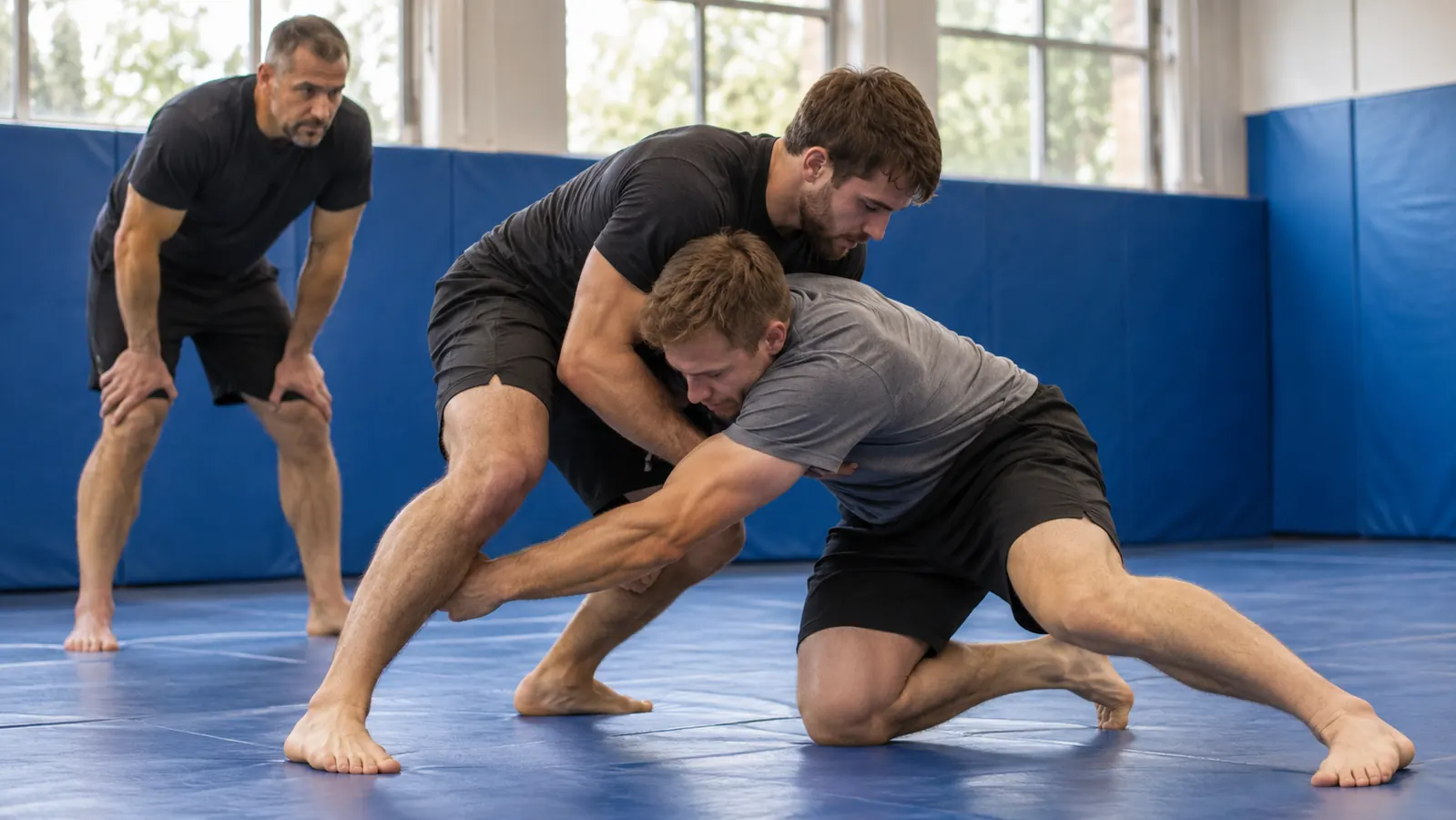
Getting thrown. I am about 185 pounds and I have been swept onto both surfaces. On the tiles, half an inch of EVA over concrete bottoms out and your hip finds the slab through it. On the thick mats at the club, the same fall is a dull thud, and you get up and keep drilling. That is the whole argument, and no underlay or accessory changes it.
Grip and seams come second. Barefoot on foam gets slick once the surface is wet, and on a humid morning you will be wiping between rounds. Vinyl-faced jiu-jitsu mats hold up to sweat that way for years. The puzzle teeth on foam also work loose under sideways pushing, where a continuous mat or a properly taped seam does not open up under a sprawl.
Your garage does standing work. Buy the floor that matches it.
The 1/2-inch ProsourceFit tiles are what sit under my bag, my rack and my own two feet every morning. 24 by 24 inch tiles, end borders in the pack, down in an hour and stacked in a corner in ten minutes when the bay has to be a bay again.
Amazon Check Today's Price on Amazon →The Thickness Question
Half an inch, measured from the highest point of the texture, is a real number and it does real work. It takes the sting out of bodyweight squats, it makes a knee tolerable during drills, and it stops the cold coming up through concrete. That is a floor doing its job, and doing it well.
What it is not is impact absorption for a fall. A throw puts a whole body onto a small area in a fraction of a second, and that energy has to go somewhere. Foam that thin passes it straight to the slab. That is not a knock on the product. The listing sells it as gym flooring and play area flooring, and that is exactly what it is.
I tested it rather than guessing. On a Tuesday last spring I set up a knee tap drill on the tiles and finished it onto my hip, the way it would go in a live exchange, at maybe half speed. Half speed was enough. I felt the slab come up through the foam at the hip and the shoulder, and I did not run it a second time. I have taken that same fall hundreds of times on the club mats and the only thing I notice afterwards is a bit of mat burn.
People try to solve the gap by laying two layers and it does not work. The top layer walks against the bottom layer, the teeth stop lining up, and you end up with a surface that is twice as thick and half as stable. If you need a landing surface, buy a landing surface.
Half an inch of foam will save your knees during drills. It was never built to save your ribs during a throw, and it does not.
What Wears Out First
Two years in, the tiles are still doing the job, with caveats. The first thing to go is not the tile, it is the joint. I know exactly which one it is: fourth row back from the bag, third tile across. That is where I stand to coach my son through pad rounds and where most of my own shadowboxing happens, and it is the tile whose teeth sit proudest. Around month fourteen I started swapping it with one from the back corner every few months. Spreading the wear instead of concentrating it has kept it flat since.
The surface has gone from smooth to faintly grainy where feet land most, and it holds dust in the texture, so a quick wipe before a session does more than a deep clean after one. The listing says air dry, so I wipe with a damp cloth and let them sit rather than soaking them, and I have never had a smell problem. Beaten-up edges are the other one, usually from gear being dragged across rather than from training. I keep two spare tiles from the last pack standing in the rack for the day an edge finally gives out, and nothing has needed replacing yet. The listing mentions a limited lifetime warranty and I have not had to test it.
What I Liked
- Down in under an hour, no adhesive and no cutting
- Light enough to stack and carry alone, a 6-tile pack is listed at 5 pounds
- Warm and forgiving underfoot on bare concrete
- End borders included, so the outer edge finishes clean
- Replace one tile instead of a whole floor
- Fine under a heavy bag, a rack and bodyweight work
Where It Falls Short
- Half an inch is not a landing surface for throws or takedowns
- Gets slick barefoot once the surface is wet
- Puzzle joints work loose under sideways pushing
- The texture holds dust and needs a regular wipe
- Edge tiles take the damage when gear gets dragged across them
If You Only Have One Room
The question people actually ask me is whether they can put thick mats in the garage and skip the tiles. You can, if the room is only ever a training room. Mine is not. The Odyssey goes in there, the bag gets moved, my son drags gear in and out, and the bay has to be a bay again by the time Dana needs it. A 12 by 8 foam floor folds into a stack in the corner. A proper mat does not.
A student asked me this over the summer, standing in my driveway with the door up, and the honest answer took about ten seconds: count how many times a month a body hits your floor on purpose, and buy for that number. His answer was twice. Mine was zero, because the throwing happens at the club. Those are two different rooms and they need two different floors.
The reverse holds too. If you have a dedicated room, a spare basement or a unit you rent, and adults are going to be thrown in it, do not buy foam tiles and hope. Buy the thick mats once, put them down, and stop thinking about your floor. The tiles are a good answer to a different question.
Who Should Buy Which
Buy the ProsourceFit tiles if your training is standing up: kickboxing footwork, shadowboxing, bag work, stretching, bodyweight circuits, and kids classes that are games and drills rather than falls. Buy them if the room has to do another job, if you rent, if you are not yet sure the habit will stick, or if you have a concrete floor that is currently winning the argument with your knees.
Buy thick jiu-jitsu mats if bodies are going to hit the ground on purpose. That means throws, sweeps, takedowns and ground work, and it means adults, not only a kids class. It also means a room you can dedicate, because once they are down they are staying down. If you genuinely do both in one space, the foam tiles are the floor and the thick mats are a separate area you protect, not a layer you put on top of them.
Start with the floor you can put down on Saturday morning.
24 by 24 inch interlocking tiles, half inch thick, end borders included. It is what sits under my bag, my rack and two years of early mornings in a cold garage.
Amazon Check Today's Price on Amazon →