
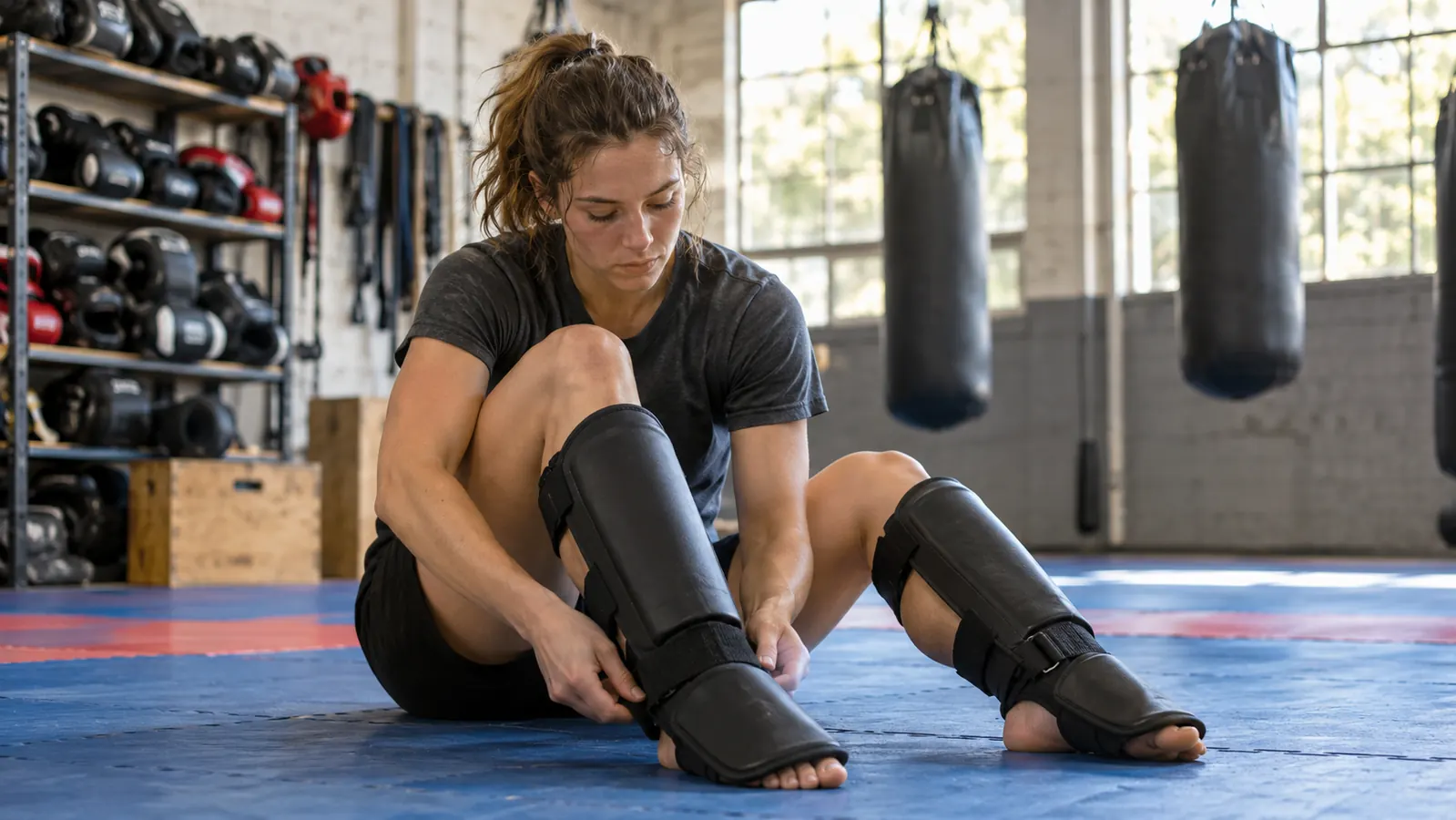
Every couple of weeks an adult in the kickboxing class stops me by the bag rack with the same question: cloth guards, or the ones with the hard shell? I have worn the Meister MMA Elastic Cloth Shin and Instep Padded Guards for about ten months, mostly for technical sparring and kick drills, and I have borrowed hard-shell guards off students for enough rounds to know the trade. Short answer: for a club like mine, the cloth pair is the better default. The hard shell is the better tool for a narrower job. It stops being a tricky question once you decide what you want the guard to do for you.
The compressed version. Drilling, technical rounds, half-power checks, four classes a week: Meister, and you forget they are on inside five minutes. Fight camp, hard sparring, competition, or a partner who cannot control his power yet: hard shell. The mistake I see most is a beginner buying the hard shell, wearing it to a technical class, and learning to check a kick with a plate strapped to his leg. The plate hides the errors. Then he gets hurt in a round where he is not wearing it.
| Meister Cloth Guards | Hard-Shell Guards | |
|---|---|---|
| Construction | Elasticated foam body that slips on, with a hook and loop strap at the top of each guard | Rigid shell over a foam backing, held on by straps or a built-in sleeve |
| Weight | Listed at 9.6 ounces, and it feels like less once it is on | Heavier, and the shells swing against the leg when you move |
| Protection from a hard kick | Foam takes the edge off. Shin on shin at full power still leaves a lump | The shell spreads the impact and turns the edge of the shin. This is what it is built for |
| Feedback while checking | You feel where the contact landed, which is how you learn to angle the check | Dulls the contact, so it is easy to get away with a sloppy check |
| Staying in place | One strap at the top, then the elastic does the rest, and it holds through a full class | Has to be cinched tight or the shell rotates around the leg on the first kick |
| Heat | The foam sleeve runs warm by the end of a hard class | Foam plus a solid plate, noticeably hotter |
| Cleaning | Hand wash, hang on the rack, dry by morning | The shell wipes clean, but the padded lining holds sweat and still needs washing |
| Gear bag space | Folds flat and drops into the side pocket | Does not fold. Takes up real room in a bag |
| Instep coverage | The elastic body covers the instep as one piece with the shin | Plate over the instep, though how much it covers varies a lot by model |
| Life of the padding | The foam compresses over a couple of seasons of regular use and then it is finished | The plate outlasts the lining, so the shell half keeps working |
| Best for | Class sparring, drills, teaching, everyday training | Fight camp, hard sparring, competition |
Where Meister Cloth Guards Win
The cloth guards win on feedback, and feedback is the whole point of a technical class. A padded foam sleeve over the shin and instep lets you feel exactly where the contact landed. Check with your shin turned too far in and you know it, because the foam compresses on one edge and you feel the angle travel up into your leg. A hard shell turns the shin into a bumper. It will stop a kick that your form should have stopped, and it will not tell you that your form was wrong. I have watched two students spend months checking badly in hard shells and then fix it in about three weeks once they moved to cloth for drilling.
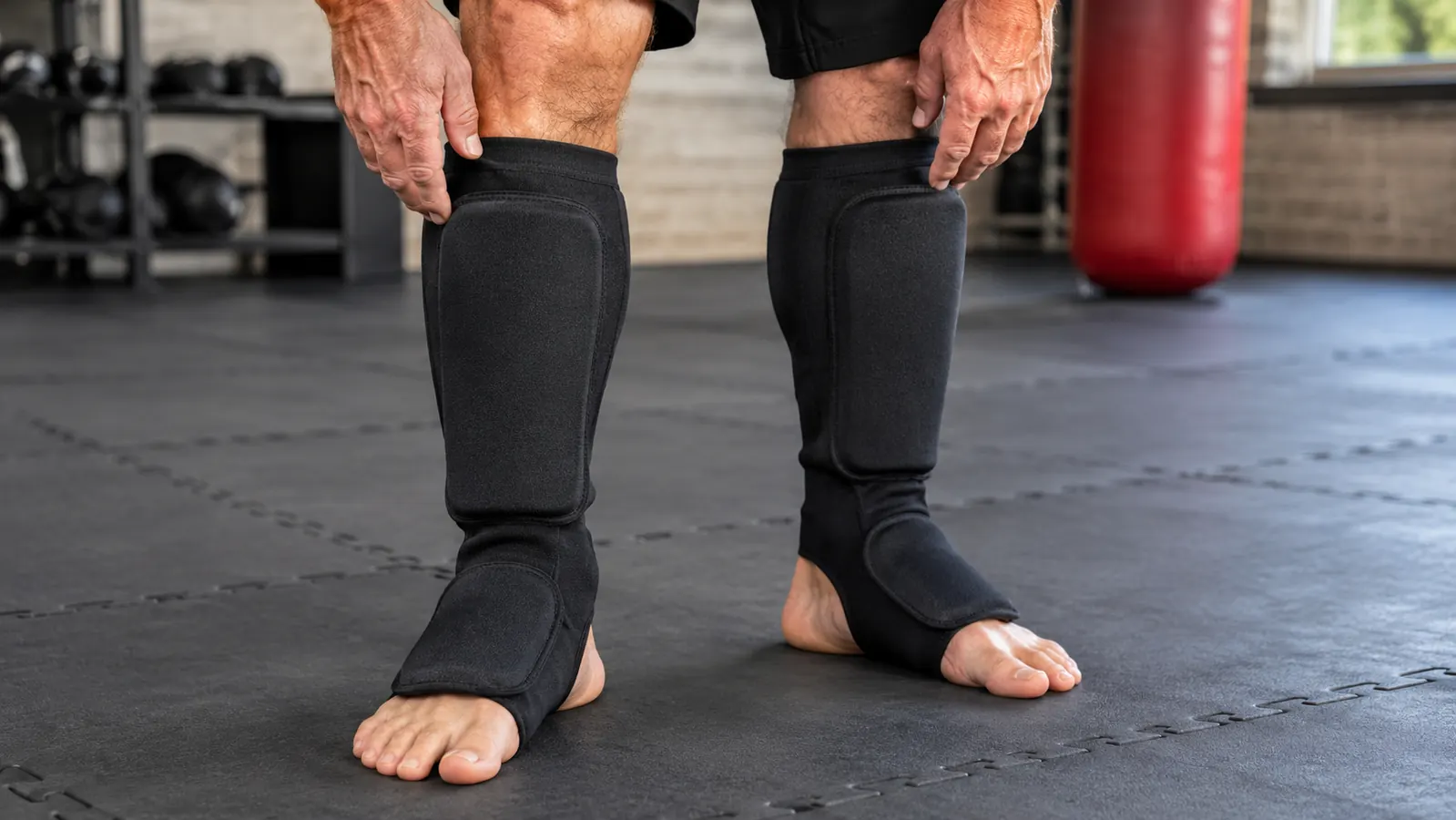
Then there is everything about living with the thing. The pair is listed at 9.6 ounces, and it slides on in a couple of seconds. The hook and loop strap at the top of each guard holds it there and the elastic body does the rest, so I am not re-strapping between rounds with gloves on. It runs warm by the end of a hard class, which is the honest cost of a foam sleeve against your skin. It also folds flat into the side pocket of my gear bag. After class it gets a hand wash in the sink, goes on the rack in the garage, and is dry by the next morning. Ten months in, the strap still holds and the foam has not gone soft.
One thing I did not expect: the instep is part of the same elastic body rather than a separate plate, so there is nothing to line up over the top of the foot. I have pulled them on in the dark of the garage before a 6 a.m. session more than once and got them right without looking. That sounds like a small thing until you have spent a morning fiddling with straps while the bag hangs there waiting.
Where Hard-Shell Guards Win
The hard shell wins one thing, and it wins it clearly: protection from a hard kick. A rigid shell over foam spreads the load across a wider patch of the leg and turns the edge of a shin that catches you at full power. That is not a small difference. The first hard round I did in a borrowed shell after a month in cloth, I remember being surprised at how little I felt. That is the point of the thing, and it is also the trap. If you are in a fight camp, if you are sparring five hard rounds on a Friday, or if you have a training partner who still throws with everything he has, the shell is what keeps you on the mats on Monday. My left knee carries an old meniscus injury from competition and I am careful about what lands on that side. When I know a round is going to be hard, the cloth guards are not what I reach for.
The shell also outlasts the padding it sits on. Foam compresses. A cloth guard used four times a week will go flat over a couple of seasons and then it is finished, because the foam is the protection. On a hard shell the plate is the protection, and the plate does not go flat, so the working half of the guard keeps working and only the lining wears through. If you are training for a competition and you want one purchase to carry you through a camp, that matters. Check with your coach or your promotion on what their rules require, because for some people that answer decides the question before anything else does.
The pair I hand to every new student on his first night
Elasticated foam, a hook and loop strap that keeps them where you put them, and a weight you stop noticing by the second round. For class sparring and drills, this is what most of my adults end up wearing.
Amazon Check Today's Price on Amazon →How I Tested Both, and Where
Everything here comes out of my own training and my own club, not a lab. I run a small mixed martial arts club in Columbus, Ohio, with about forty adult members and another twenty in the kids classes, kickboxing and Brazilian jiu-jitsu, out of a converted warehouse unit. My own work happens early mornings in the garage, on a 12 by 8 foot area of interlocking foam mats, with a heavy bag and a wall rack for gear. Those mats are for footwork, bag work, stretching and light drilling. Anything with throws or takedowns happens on the thick mats at the club, not on my garage floor.
The Meister pair has been in my bag for about ten months. Technical sparring, kick drills in the Tuesday and Thursday adult class, and a lot of standing in front of students showing them where to put their shin. I lend it out, too. New students wear my pair for a round or two before they buy anything, which is how a fair number of them end up ordering the same thing. The hard shells I have used are students' pairs, borrowed for rounds where I wanted to feel the difference again rather than remember it.
I keep a note in my phone after sessions where something bothered me. The only entries against the Meister pair in ten months are about heat in July, and one morning where I had washed them the night before and they were still damp, so I wore them damp. Nothing about fit, nothing about the strap coming loose, nothing about the foam shifting under my foot. The hard shells generate a different kind of note, mostly about re-cinching them mid-round.
I will also say what I cannot tell you. I have not run anything that measured force, and I have not compared bruise sizes with a ruler. What I can tell you is what my legs felt like the next morning after a hard round in each, and what the gear looks like after a season of real use in a room full of adults who are not careful with it. That is the level of evidence this is, and you should weigh it that way.
A hard shell will stop a kick your form should have stopped, and it will never tell you that your form was wrong.
The Check Is the Whole Argument
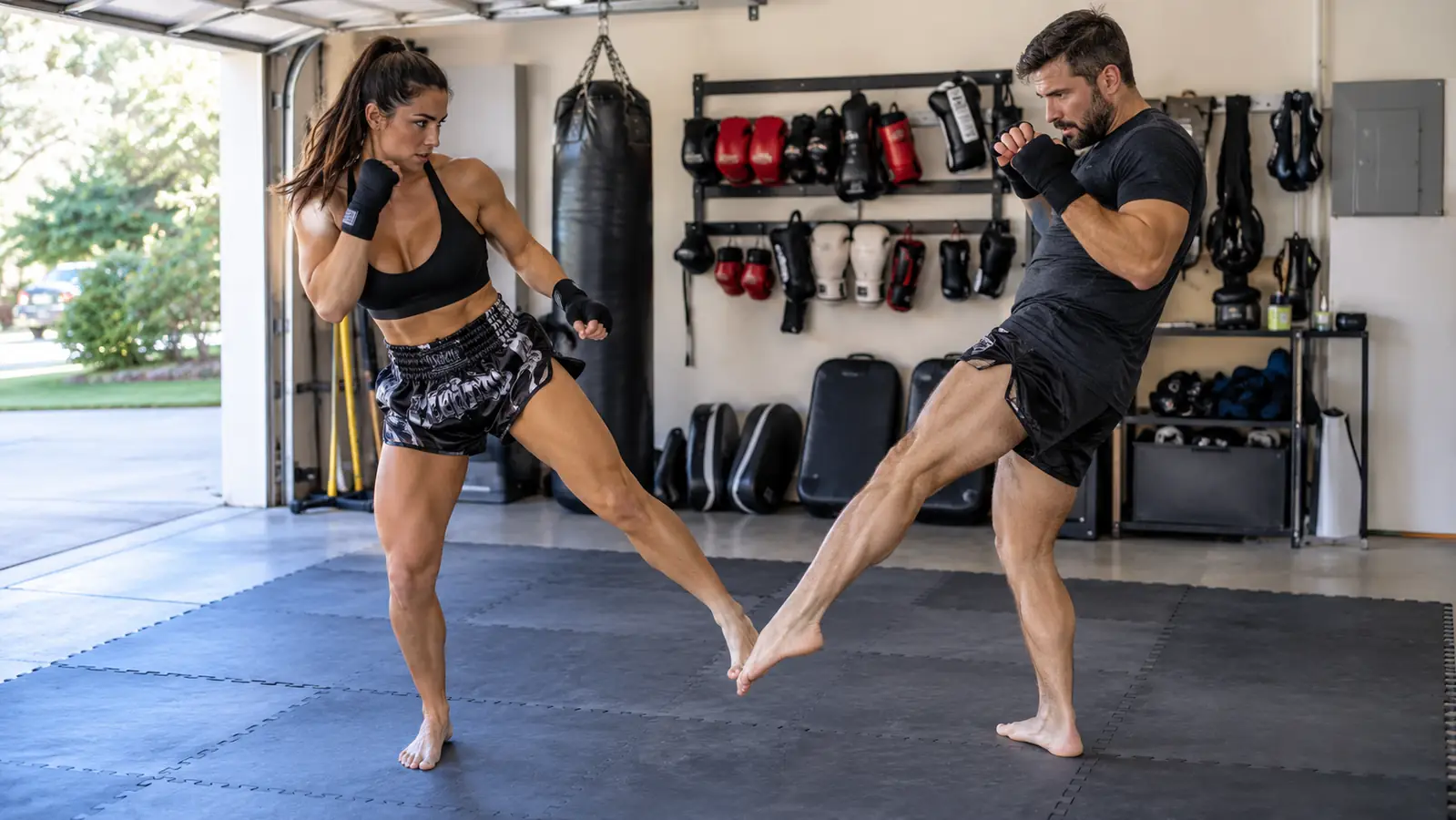
If you take one thing from this, take the check. Almost everything I teach a beginner in the first three months is about the check: turn the shin out, meet the kick early, keep your hands up while you do it. It is a timing and angle skill and it is learned through contact. The guard you wear while you learn it changes how fast you learn it. Cloth gives you a clean signal on a bad angle. The hard shell gives you a dull thud and the same bad habit, minus the bruise that would have taught you something.
The drill I use is simple. One partner throws a slow low kick, the other checks, two minutes with no power in it at all. In cloth the student can feel whether the shin met the kick at the right angle. In a shell the feedback is flat enough that I end up watching the leg instead of asking the student what he felt, and watching is a worse teacher than feeling.
Where that flips is when the check stops being a lesson and becomes a job. In a hard sparring round nobody is learning. You are trying to get through five rounds without a dead leg, and the shell is the right tool for that job. My rule for the club is simple. Cloth for class and drills. Shell for hard rounds and anyone in a camp. Most adults who stay past a year end up owning both, and the cloth pair is the one that gets worn out first, which tells you something about which one they actually reach for.
Fit, Heat, and the Details That Only Show Up Later
Fit is where the cloth guard quietly beats most hard shells. There is one strap, at the top of each guard, and then an elastic body that adapts to the shape of the leg and foot. It goes on in a couple of seconds and there is nothing to adjust between rounds. The hard shells I have borrowed needed real work to sit right. Cinch them loose and the shell rotates around your leg the first time you throw a kick. Cinch them tight and you feel it in your calf twenty minutes later. I have watched people spend more time fussing with straps than drilling.
Heat is the other thing nobody mentions until they own a pair. Both trap it, because both are foam against your skin. The shell is hotter, since you have foam and a solid plate with nowhere for the heat to go. My garage has no air conditioning and the door stays shut through January, so I get both ends of it. The cloth pair is uncomfortable by the end of a July class and fine in February. The shell I borrowed in August was a different category of unpleasant, and I handed it back without being asked twice.
Cleaning runs the same way. My pair gets a hand wash and a night on the rack and it is fine. Hard shells wipe clean on the outside, but the padded lining is what holds the sweat, and that lining still needs washing, so the easy-clean argument is thinner than it looks from the outside.
Who Should Buy Which
Buy the Meister cloth guards if you train in class two to four times a week, do technical sparring and drills, and want to learn to check properly. They give up nothing in mobility, they let you feel what you are doing, and they hold their position through a full session. They are also the pair I would put on a brand new adult or a kid before anything else, because the protection is real for controlled contact and the feedback is better. If your training is mostly class, this is the one purchase that does the job.
Buy the hard shell if you are in a fight camp, sparring hard every week, competing, or training with people whose power control is not there yet. I would also point an adult with a history of shin bruises and bone bruises in that direction without hesitating. If you are honestly in both camps, which is most people who stay with this past a year, own both. Wear the shell when the round is hard and the cloth when you are learning. Nobody at my club has ever regretted owning the cloth pair. A few have regretted making it their only pair.
Start with the pair that teaches you something
Slip-on, elasticated foam with a hook and loop strap at the top of each guard. Ten months of class use on my pair and the strap still holds them where I put them. For drills, sparring and teaching, this is the pair I recommend first.
Amazon Check Today's Price on Amazon →