
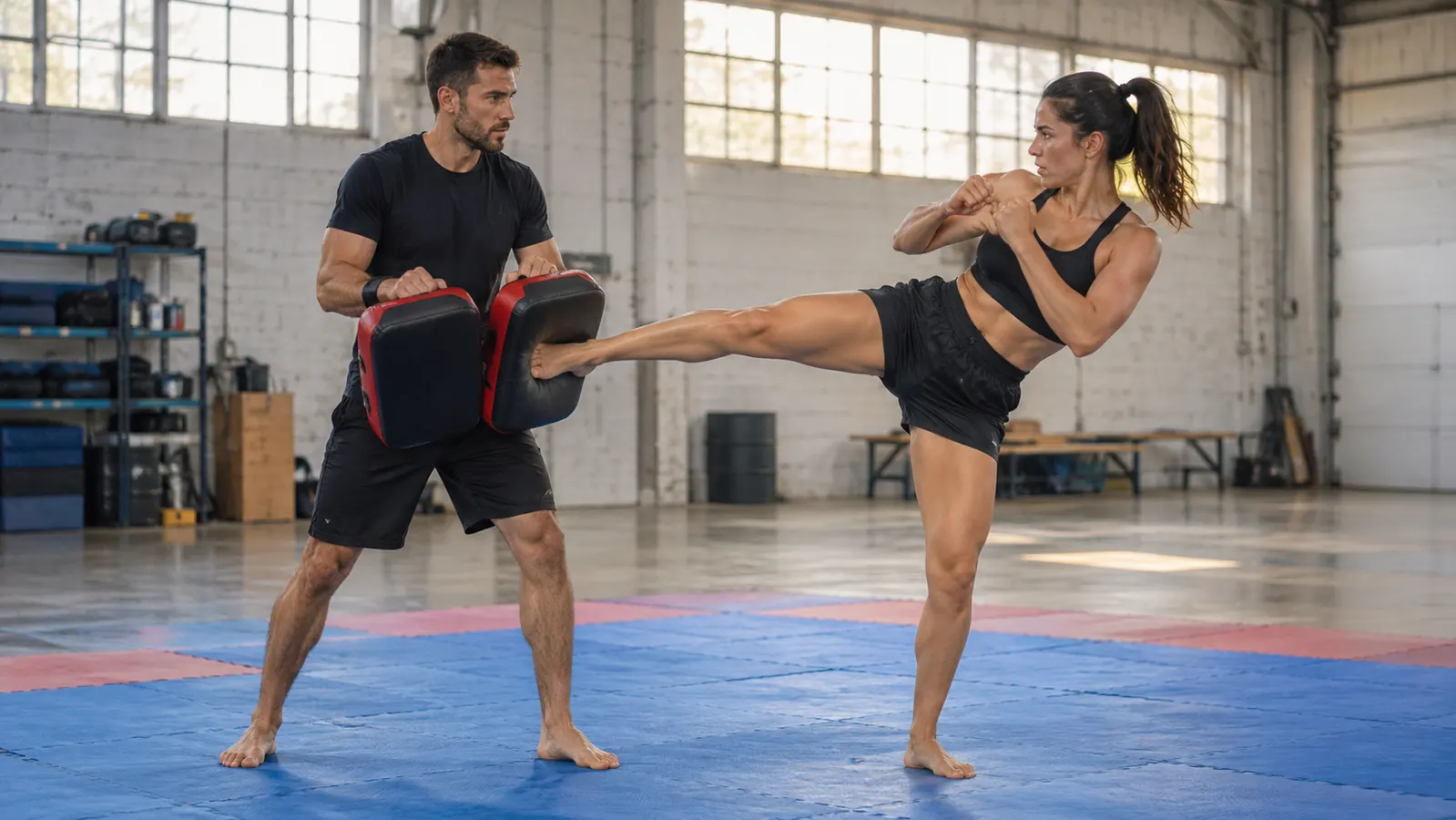
A student asked me last month why he needed shin guards for sparring if we were only going light. Two rounds later he checked a kick with his bare shin and spent the rest of the night on the wall bench with ice. That is the whole argument in one story. Sparring is not the same as hitting a bag. When two people are moving, kicks land on elbows, on hips, on knees, on the other person's shin, and the shin is a bone with almost nothing over it. I run a small kickboxing and jiu-jitsu club in Columbus, about 40 adults and 20 kids, and I have worn the Meister MMA elastic cloth shin and instep guards for roughly ten months of technical sparring and kick drills.
These are a padded foam slip-on guard with a hook and loop strap, not a hard shell. That distinction matters, and I get into where it does and does not work below. But before the trade-offs, here is what ten months of wearing them has actually shown me, in the order I would explain it to a new student walking in the door for his first sparring class.
The guard I hand a new student before his first sparring round
Padded foam, slip-on body, hook and loop strap at the top. Ten months in, mine are still holding through a full round.
Amazon Check today's price on Amazon →The strap at the top is why they stop sliding down
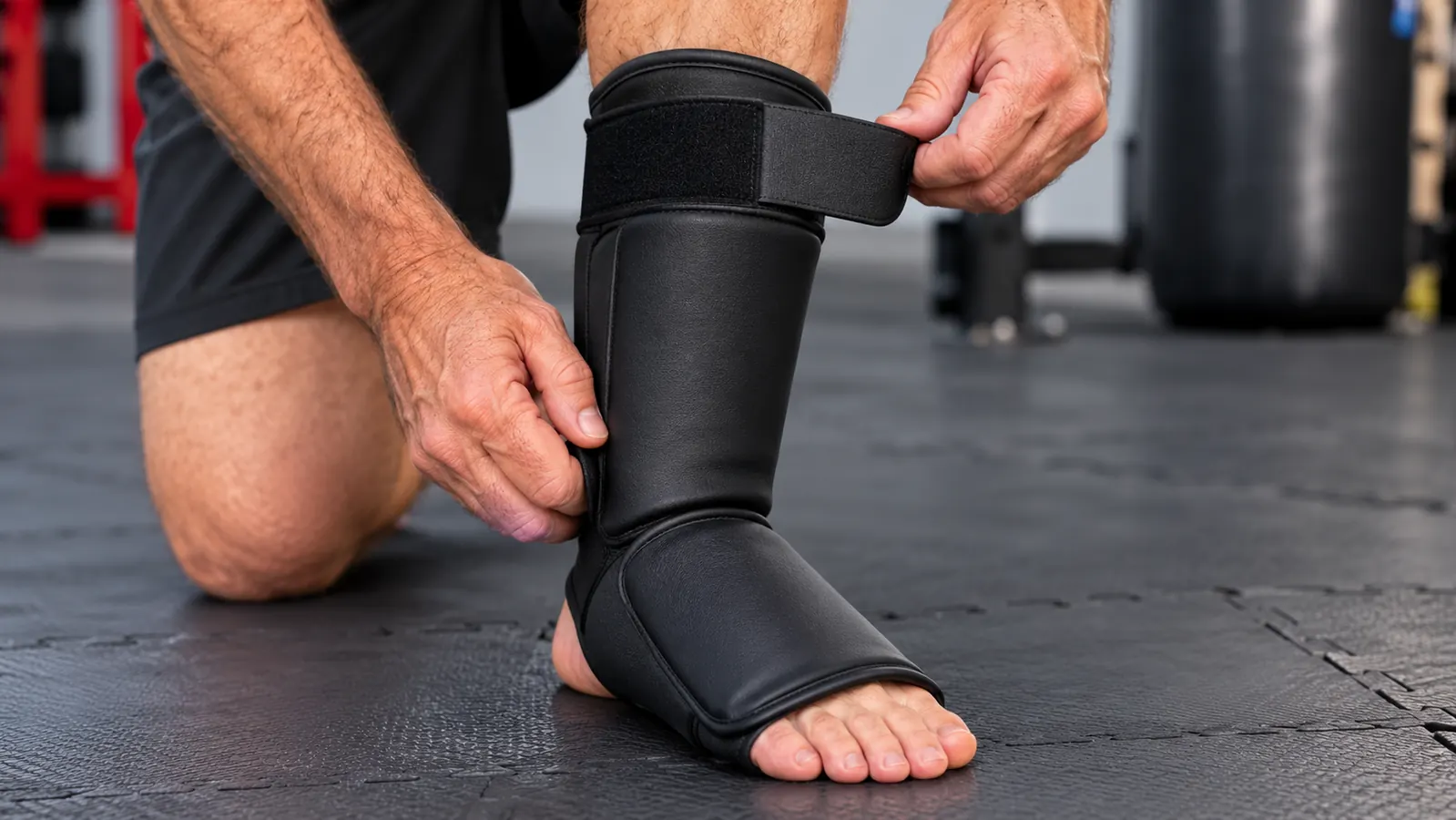
Every slip-on guard I have used had the same failure point. Twenty kicks into a round, the top edge had worked its way down and I was pulling it back up between exchanges. The Meister guards carry a hook and loop strap across the top of each one, and that is the part doing the real work. Set it once at the start of class and it holds through a full round of kick drills. I snug it a notch for sparring and back it off for pad work.
A check registers as pressure instead of bone on bone
When two shins meet, the person who feels it worst is the one with less covering. The foam in these spreads contact over a wider area, so a check lands as a dull push up the leg rather than a sharp line. I am not going to tell you it makes a hard kick comfortable. It does not. What it does is take enough of the edge off that you keep your guard up instead of dropping the leg and eating the next kick.
Instep coverage is what saves your foot on a missed kick
Most people think about the shin and forget the foot. The instep is the row of small bones on top of your foot, and it is what arrives first at an elbow or a hip when a kick comes up short. These run from below the knee down over the instep, so a missed kick costs you a bruise through foam instead of a week off. That is the main reason I put these on students before their first sparring round.
The slip-on body means nobody is re-strapping mid-drill
The listing calls it a fully elasticated body. In practice that means you pull it on like a sock. No laces, no buckles, no second person needed. In a class of twenty where I am trying to keep everyone moving, that saves real time. A student can get both guards on in under a minute and be on the mat before the drill starts. The guards I have used with more hardware took longer and needed adjusting constantly.
At 9.6 ounces they do not change when your kick arrives
Listed weight is 9.6 ounces for the pair, light enough that I forget I am wearing them once the round starts. This matters more than it sounds. A heavy guard slows the last part of the kick, the snap, and you start compensating with your hip. With a light guard your kick looks on the bag the way it looks in the air. For a beginner still learning timing, that feedback is the whole point of drilling.
The top edge stops below the knee, which is the spot I need covered
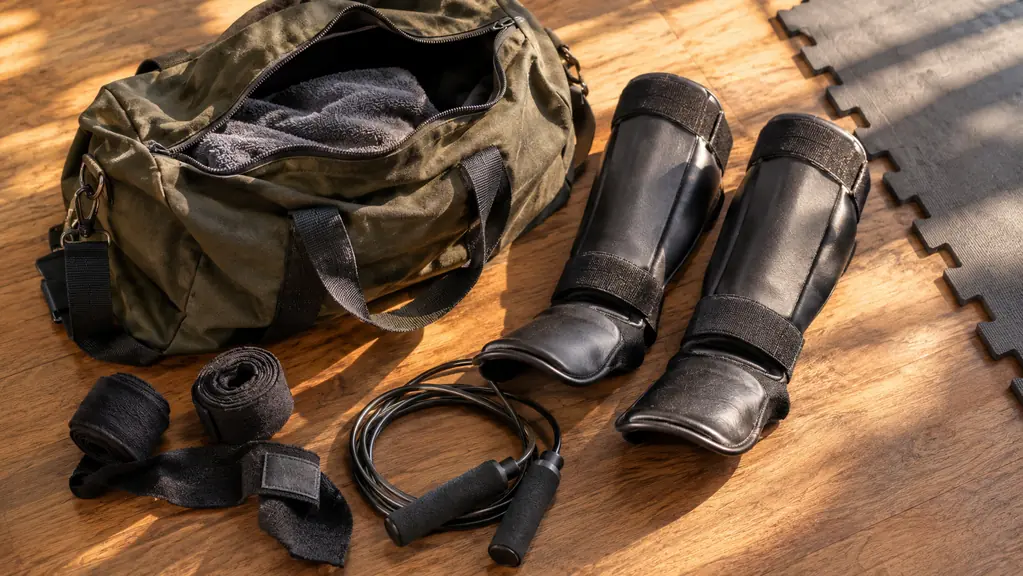
I have an old meniscus injury in my left knee from competing in my twenties. It is manageable, but I am careful about what lands near it. These guards stop below the knee, so they do not pretend to be knee protection. What they do is cover the shin on that side, which is exactly where checks land when I work with a taller partner. I add a separate knee sleeve on bad mornings. Two pieces of gear, two jobs.
New students stop turning away from contact
The biggest change I see in the kids class is not technique. It is posture. A kid without shin protection turns his leg away when a kick comes, and once he turns away he is not learning anything. Put padded guards on and he stands in and checks. Same with adults. The guards do not make anyone brave. They remove the one thing that makes a beginner hesitate, which is being certain this is going to hurt.
They earn their place in drills and bag work, not just sparring
I started wearing these for sparring only, and now they are on for most of the Tuesday and Thursday class. Kick drills on the bag, partner checks, low kicks into a Thai pad. The foam takes the sting out of the tenth repetition of the same kick, and the tenth repetition is when form actually improves. If a guard only comes out for sparring, you lose that. This one is easy to leave on.
They come off at the end of class without a fight
Small thing that matters over a year. These slip off as easily as they go on and do not need to be untangled from anything. I hand wash mine in cold water, hang them on the rack in the garage to air dry, and they come back the next morning without a smell. The construction is foam under cloth, so the only thing I actively avoid is leaving them in a hot car with the rest of the gear.
One pair holds up to being lent out
I keep a spare pair on the wall rack for students who show up without gear. Ten months of that is a fair test. The elastic has not gone slack, the strap still grips, and the foam has not packed down into nothing. That is the honest measure of protective gear. Not how it looks on day one, but whether it still does its job after it has been on forty different sets of legs.
What I'd Skip
The honest version. Skip these for hard, competitive sparring at full power. This is a padded cloth guard, not a hard shell, and there is a class of heavy kick it will not fully absorb. If you are preparing for a fight and trading real kicks, buy a hard-shell guard and accept the extra weight. The same goes if you are shopping for knee protection. These stop below the knee and will not help you there. What I would also skip is sizing down two sizes hoping for a tighter fit. The strap does the tightening. Order your normal size and set the strap.
Ten months, two classes a week, and the strap at the top of the Meister guards still holds through a full round. That is the first thing I check on any guard before I buy it.
If you spar more than once a week, this is the pair to start with
Meister MMA elastic cloth shin and instep guards. Padded foam, slip-on fit, hook and loop strap at the top. The spare pair in my rack gets lent out every week and has held up.
Amazon Check today's price on Amazon →