
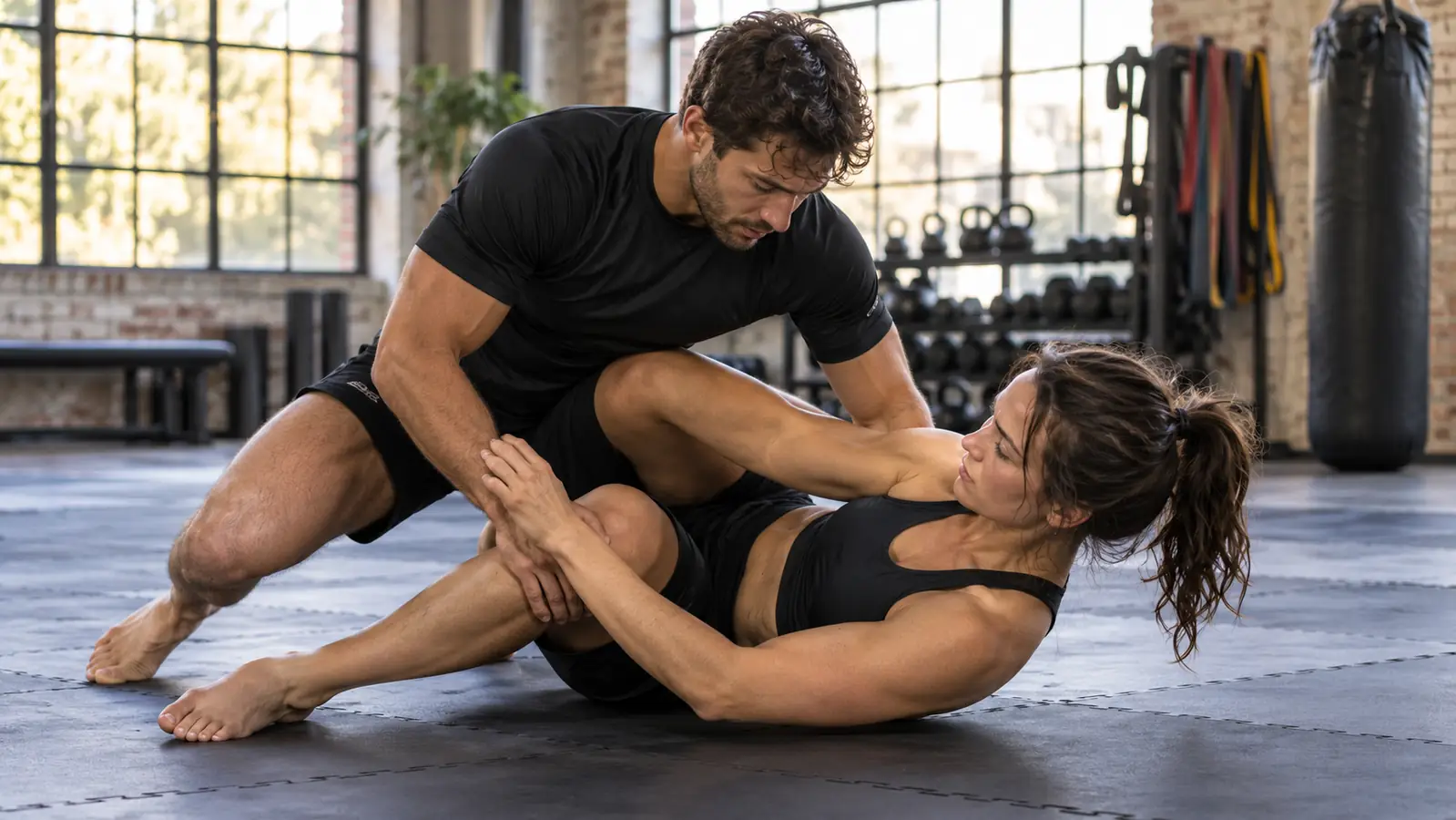
If you are shopping for a no-gi rash guard, there are two reasonable doors to walk through and about forty bad ones. The LAFROI long sleeve compression top is the general purpose baselayer that a lot of people buy first: slim cut, UPF 50+, sold for boxing, jiu-jitsu, MMA and kayaking all at once. A premium BJJ rash guard from a brand like Tatami is the purpose-built version. It costs more, it does a narrower job, and it does that narrower job better. I own two LAFROI tops, I have worn them twice a week for about eight months, and I have spent that same eight months rolling with people wearing the other kind.
Here is the short answer. Train two or three nights a week, wash your gear in a machine, and want one shirt that covers no-gi class, outdoor bag work and a paddle in July? The LAFROI is the sensible buy. Compete, train four or five nights a week, or notice when a hem creeps up your ribs during a scramble? The premium shirt earns its higher cost. Neither of those is a knock on the other, and anyone who tells you one shirt wins every category is selling something.
| LAFROI long sleeve | Tatami premium BJJ rash guard | |
|---|---|---|
| Sun protection | Listed at UPF 50+, so it works outdoors on its own | No sun rating. It is a grappling shirt, not a baselayer |
| Compression feel | Slim fit that stays tight through the arms and chest | Snug, but closer to a fitted tee than a compression layer |
| Torso length when you invert | Standard baselayer length, so the hem rides up | Cut longer so it stays tucked through scrambles |
| Seams and hem | Plain hem, straight side seams, nothing special at the waist | Cut and stitched for grappling, with seams placed clear of knees and collars |
| Use beyond the mat | Works for outdoor bag work, running and kayaking | Made for the mat and little else |
| Care routine | Cold machine wash, hangs dry overnight | Cold wash and air dry, heavier fabric takes longer |
| Cost | Costs less than a purpose-built BJJ shirt | Costs more, and the gap is not small |
| Best for | Beginners, multi-sport use, layering under a gi | Competition and heavy weekly mat time |
What the LAFROI Actually Is
The listing describes it as a men's long sleeve UPF 50+ baselayer with a performance fit. Slim fit, crew neck, long sleeve, plain hem, elastic closure, roughly 0.2 kg. The version I have carries a dragon print. The listed occasions run from boxing and Brazilian jiu-jitsu through to kayaking, outdoor sports and daily wear, which tells you what it is: a multi-sport baselayer, not a grappling shirt with a sun rating bolted on.
That distinction sounds like marketing hair-splitting. It is not. A purpose-built BJJ rash guard is designed around one activity. It assumes you will be gripping fabric, sliding on your back, and spending time upside down. A baselayer is designed around being worn under something else, or on its own in the sun. The LAFROI is the second thing. If you buy it expecting the first, you will be mildly disappointed in a way that has nothing to do with quality.
UPF 50+ is the feature that separates it from a plain compression tee. For outdoor sessions, summer bag work, or a day on the water where you would otherwise be bare-armed, that rating does real work. It is also why I do not mind lending one to a parent standing in the sun for an hour during kids class. I have done bag work in the garage on a July morning in a plain compression tee and finished with pink forearms and a red neck. I have not had that happen in this one. That is a single morning of evidence, not a study, but it is the kind of thing you notice once and then stop worrying about. What it is not is a substitute for sunscreen on a full day outside. Nobody at my club has tested it that way and I am not going to pretend otherwise.
Eight months of twice-weekly no-gi and cold washes have not opened a seam. The cuffs are the only part that has given ground.

Where LAFROI Wins
The first win is range. One shirt covers no-gi on Monday, bag work in the garage on Saturday, and a paddle in between, and it does all three without looking like you wandered out of a tournament. Very few BJJ rash guards bother with a sun rating at all. The LAFROI carries UPF 50+ on the listing, which means the protection you would otherwise buy as a separate layer is already in the shirt you were going to wear anyway.
The second win is fit and cost. The slim cut stays tight through the arms and chest and does not balloon at the waist, which is exactly what you want under a gi jacket or a warm-up. It is also less expensive than a dedicated BJJ shirt. At a club with roughly 40 adult members and 20 kids, that gap decides what I hand to a new student who is not sure yet whether he will still be training in three months. I would rather he puts the difference toward a second night of classes.
Where Tatami Wins
The first concession is torso length. A BJJ rash guard is cut longer so it stays tucked when you invert. The LAFROI is cut like a baselayer, which means it is not. In a scramble, or when someone is stacking you, you will feel the hem creep toward your ribs and you will reach back and pull it down. I have watched it happen from the side of the mat more times than I can count, and it is always the same reach back and tug. It is a small thing that happens four times a round. Small things that happen four times a round are how gear gets replaced.
The second concession is construction for the mat. Premium BJJ shirts are cut and stitched for grappling, with seams placed where a knee or a collar will not sit on them. They feel heavier in the hand and they hold their shape through a long training camp. I have not run a Tatami for eight months, so I am not going to tell you how it holds up past a season. What I can tell you is that the people at my club who train five nights a week are not wearing the cheap option, and it is not because they enjoy spending money.
One shirt, three sports, and it survives the wash
The LAFROI long sleeve is what I hand to newer students: slim fit, crew neck, long sleeve, plain hem, UPF 50+, and it takes a cold machine wash without complaint.
Amazon Check Today's Price on Amazon →Eight Months on the Mat
I bought two LAFROI tops about eight months ago and wear one for Monday and Wednesday no-gi. They get washed cold after every session and hung on the rack in the garage to dry. No dryer, not because the label demands it but because a dryer is how compression fabric dies young.
What has held: the body, the shoulders, the crew neck and the print. No seam has opened. The neck has not stretched out into a scoop, which is the usual failure point on a cheap compression top and the reason I stopped buying them for a while. By rough count that is north of 60 sessions per shirt and the same number of cold washes, since I rotate the two. Any compression top that is going to fail at the neck or at a shoulder seam has usually failed by that point, which is why I bother mentioning it. What has changed: the cuffs are slightly looser than they were eight months ago, and the fabric pills a little where my belt sits. Neither of those changes how it trains.
What I cannot tell you is how it handles a competition room. The hardest abuse one of mine has taken is a Thursday roll with a former wrestler who grips like a vice, and it came out of that intact. But I have not had one torn, and I have also not been gripped hard by a heavy brown belt every round for eight months, because that is not what my club looks like. If that is your week, expect the fabric to show it sooner. This is a 0.2 kg baselayer. It is not a reinforced competition shirt and it does not claim to be one.
What I Liked
- UPF 50+ rating, which most BJJ rash guards do not carry
- Slim cut stays tight through the arms and chest under a gi jacket
- One shirt covers no-gi, outdoor bag work and water sports
- Cold machine wash, hangs dry overnight on a rack
- Costs less than a purpose-built BJJ rash guard
Where It Falls Short
- Standard baselayer length, so the hem rides up when you invert
- Cuffs loosen slightly over a season of twice-weekly training
- Not cut for grappling, so the seams sit where a BJJ brand would not put them
- Slim fit is unforgiving if you are between sizes
Under a Gi and Over a Belt
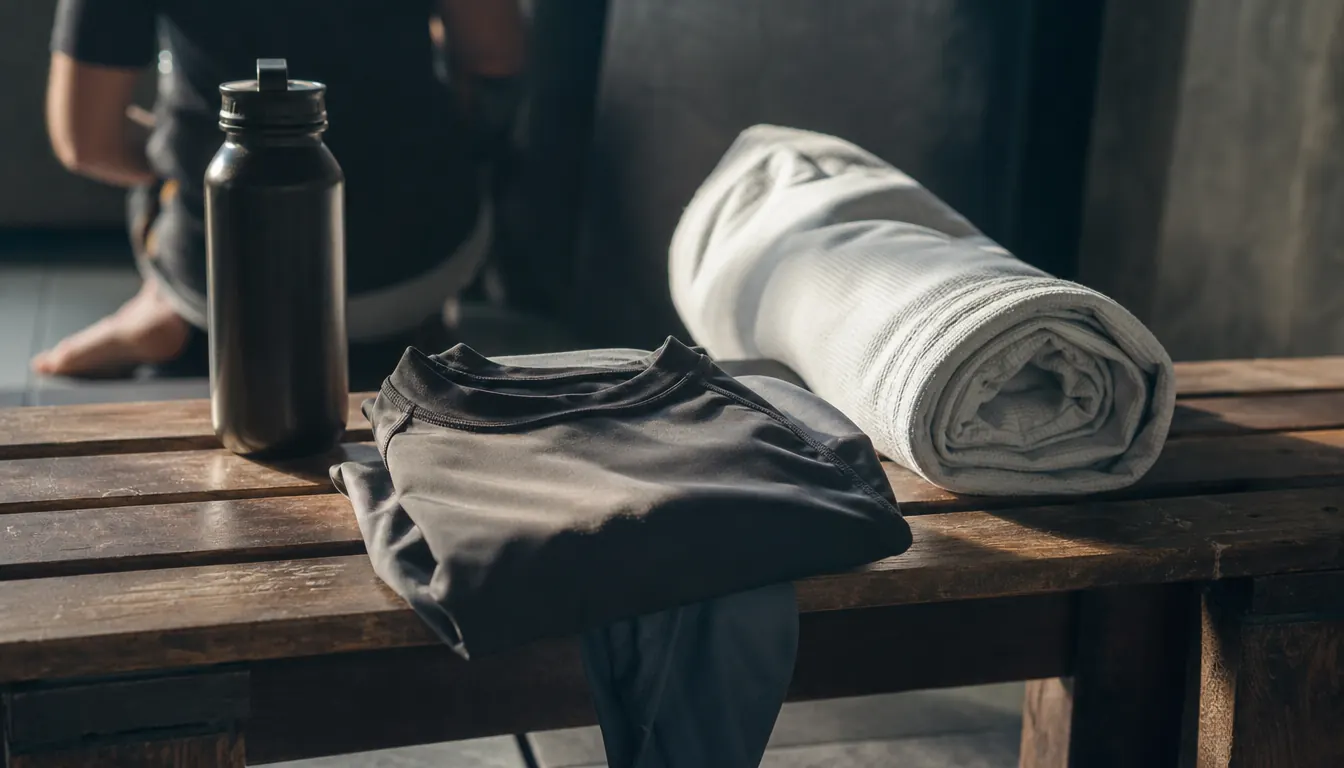
Both shirts work under a gi jacket. The slim cut on the LAFROI means less bunching at the armpits when you close the jacket, and the crew neck sits flat instead of showing above the collar in a way that gets you told to fix your uniform. I wear it under the jacket for gi rounds in the colder months and on its own for no-gi. Same shirt, two jobs, which is the entire argument for a baselayer in a gear bag that is already too full.
Long sleeves change the grip picture. People will grab cloth where they would otherwise grab skin, so a sleeve that holds its length matters more than a sleeve that looks good in a photo. The LAFROI sleeves have held theirs. I first noticed the cuff thing on a Tuesday night gi class, mid guard pass, when a training partner got a fistful of sleeve near the wrist and my arm went with him. Loose cloth is a handle. It is not a reason to throw the shirt out, but it is a reason a competitor picks the other one, where the cuff stays tight for longer. That is part of what you are paying for.
Neither shirt is going to stop mat burn or a bad grip. A rash guard is a layer. It keeps skin off skin and it keeps your forearms from dragging on the mat, and both of those are worth having on a Tuesday night. It is not armour, and the real-world difference between the two shirts on that front is smaller than the marketing suggests.
Sizing and the Details That Matter
The fit is listed as slim and it means it. If you are between sizes, or you carry your weight in the chest and shoulders, size up. I am about 185 lbs and I wear my normal size. It is tight, which is the point of a baselayer, but it is not a shirt I would wear to the grocery store. One of my adult students, built through the shoulders and about my height, ignored that and bought his usual size. He got three sessions out of it before he handed it to his brother and ordered the next size up. That is the whole warning, and it is cheaper to take it from him than from me.
The plain hem is worth a note. There are no thumb loops, so nothing catches on your fingers when you are pulling it on at 6 am in a cold garage. The crew neck sits flat under a gi collar instead of bunching into a roll. The elastic closure has not deformed or folded over on itself. The long sleeve runs to the wrist and stays there, which matters if you are the person who keeps picking up mat burn on the forearms.
Care is the least interesting part and the part that decides how long the shirt lasts. Cold wash, hang dry, and do not leave it in a bag overnight. A rash guard that sits damp in a gear bag will smell like a gear bag permanently, and no wash cycle fixes that. This is equally true of the premium shirt, so it is not a point in either column.
Who Should Buy Which
Buy the LAFROI if you train two or three times a week, if you want one top that works for no-gi, outdoor conditioning and water sports, or if you are outfitting a beginner who has not committed yet. Buy the premium BJJ rash guard if you are on the mat most nights, if you compete, or if a hem riding up during a scramble is the thing that will bother you at 8 pm on a Wednesday. Those are different customers and neither of them is wrong.
The honest version is that plenty of people will buy the LAFROI, train for a year, and never need the other one. Some people will buy the cheap one, fall for no-gi, and pick up the premium shirt six months later. Both of those paths are fine. What is not fine is buying a baselayer, expecting it to behave like a competition shirt, and then blaming the shirt for the gap.
Start with the shirt that survives the first six months
Two of these have taken everything my Monday and Wednesday no-gi classes could give them. If you are new to this, those are the two nights that matter.
Amazon Check Today's Price on Amazon →