
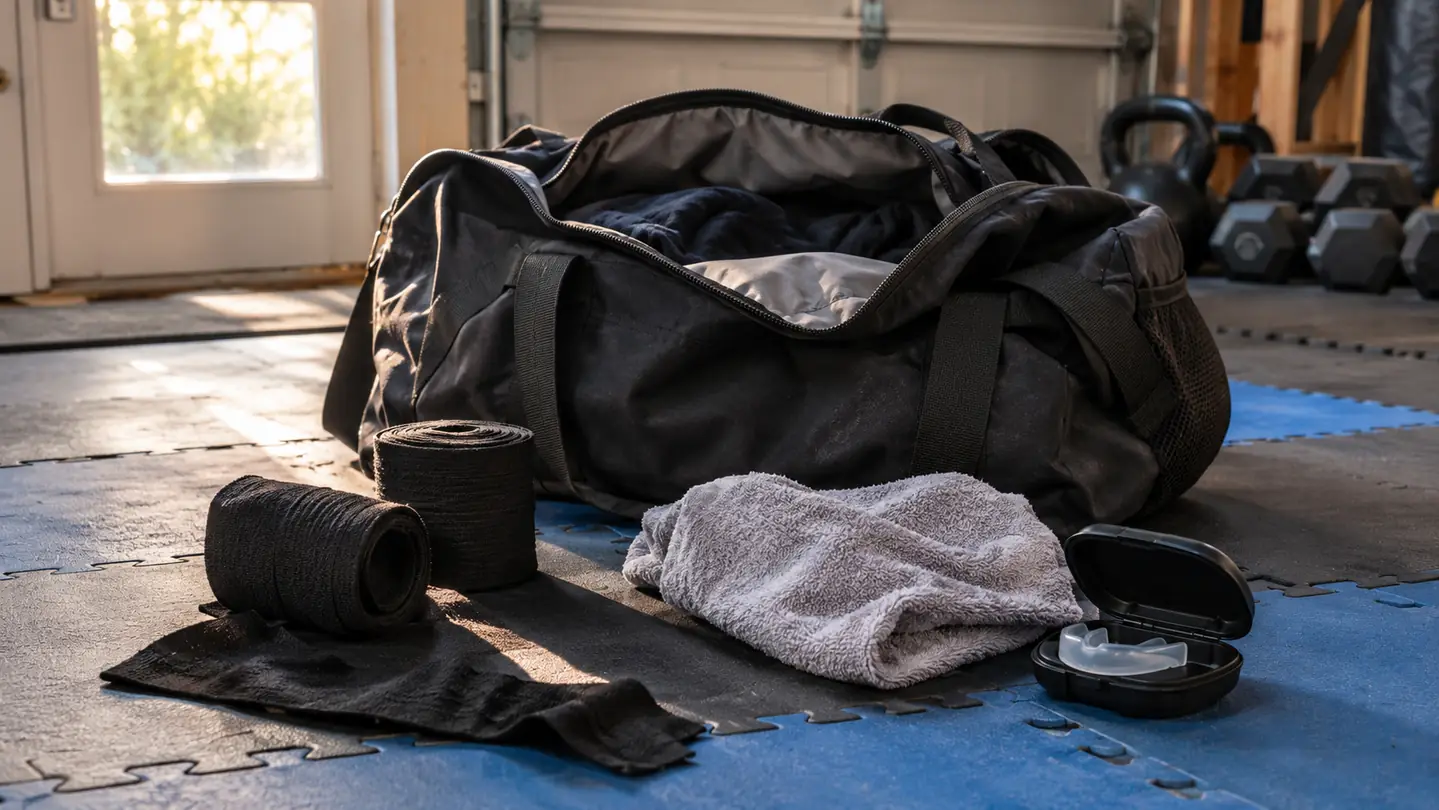
Every couple of weeks, at the end of a Tuesday kickboxing class, somebody peels out their mouth guard and asks me whether the Shock Doctor Gel Max is worth it compared with the plain boil-and-bite guard they can grab at any sporting goods store. Here is the short answer I give while I am still unwinding my hand wraps. If you spar, or you roll in a class where strikes are part of the round, the Shock Doctor Gel Max holds its fit and stays where you put it, and that one thing matters more than every other line on the package. If you are buying for a kid in his first term of class, or you want a spare that lives in the van, a plain single-layer boil-and-bite does the job and I will not pretend otherwise.
I have coached for about 15 years at a small club in Columbus, Ohio. Roughly 40 adults and 20 kids, kickboxing and Brazilian jiu-jitsu under one roof, in a converted warehouse unit with mats that I sweep myself. Gear gets lent out in my club before I ever form an opinion about it, so I end up fitting guards on other people's teeth most weeks. I have worn the Gel Max for every sparring round and every roll with strikes for years now, and I have handled more plain guards than I can count, because a plain guard is what most new students bring on their first night. Neither kind is a guarantee of anything. What follows is only what I notice after a month of real use.
| Shock Doctor Gel Max | Plain boil-and-bite | |
|---|---|---|
| Fit retention after the first month | Gel-Fit liner sets around the teeth and keeps that shape, mine still clicks into place at five months | Single layer thins out and goes slack, often needs a re-boil or a replacement |
| Profile in the mouth | Heavier frame with more material between the lips | Thin and easy to forget you are wearing it |
| Breathing in hard rounds | Moulded breathing channels run through the front | Solid wall, you breathe around the edges of it |
| Staying put in a scramble | Comes with a strap, and mine has never come out mid round | Most have no strap, and a slack guard shifts when you get shoved |
| Talking a student through a drill | Audible, but you sound like you are chewing your words | Slimmer wall, noticeably clearer from three feet away |
| Kids who lose things | One guard, one case, and losing it is a bad week | Usually sold in packs, so a lost guard is not a crisis |
| Material labeling | Listed as latex free, BPA free and phthalate free | Varies by brand, read the back of the package |
| Adult and youth sizing | Listed in adult and youth sizes | Youth sizing varies by pack and brand |
| Best for | Sparring and rolling with strikes | Drilling, first classes, and a spare in the gear bag |
Where the Shock Doctor Gel Max Wins
The fit is the whole argument. You drop the guard in hot water, bite down, and the Gel-Fit liner sets around the shape of your teeth instead of flattening out against them like a single sheet of plastic. That liner is the reason mine, fitted about five months ago, still clicks into place over my back teeth. It gets rinsed after every session, shaken out, and stored in its case in my gear bag. This matters because a guard that has gone slack does not sit still when somebody shoves you in a clinch. A guard that moves is a guard you start thinking about mid-round, and the moment you are thinking about your mouth you are not thinking about the person in front of you.
The rest of the design supports that fit. The heavy duty frame, which Shock Doctor calls its Exoskeletal Shock Frame, gives the front of the guard something solid to bite against, and that is exactly what you want when you are grinding down in a scramble. The integrated breathing channels run through the front, and they earn their keep in the third round of hard sparring when your nose is blocked and you are pulling air through your mouth. The strap is the small thing I did not expect to care about. I have never had this guard come out in a round, and the one time a student's unstrapped guard popped out during a takedown drill, we stopped everything to go find it on the mats. The listing also says latex free, BPA free and phthalate free, which is the sort of question a parent asks me at the front desk and I would rather be able to answer.

Where a Plain Boil-and-Bite Wins
Here is what the plain guard does better: it is thin. A single-layer boil-and-bite sits low in the mouth, and most people forget they are wearing it within a minute. That sounds like a small thing until you have watched a student quietly stop wearing a guard because it felt like a hockey puck behind their lips. A thin guard gets worn. A bulky guard that nobody likes ends up at the bottom of the bag, and the guard in the bag protects nobody. The thin guard also mumbles less. I teach in a room with a heavy bag thumping in the corner, and I need to be understood from three feet away, so on the nights I have worn a low-profile guard I could talk a student through a correction without repeating myself twice.
The second honest advantage is that plain guards usually come in packs. In a club with 20 kids, gear disappears. It goes home in a jacket pocket, it slides under a car seat, it gets left by the water fountain. A parent who bought a pack does not have a small crisis on the morning of class, and I do not have to dig out the club spare again. A single guard with its own fitted case is a commitment by comparison, and it only pays off for a household that will actually keep track of it. If your twelve year old is the kind of kid who loses a water bottle every other week, buy the pack and stop fighting it.
Buy the guard you will still be wearing in round three
The Shock Doctor Gel Max is the one I fit for sparring, and the one that still snaps over my back teeth at five months of daily club use. If your class involves strikes, start here.
Amazon Check Today's Price on Amazon →Who Should Buy Which
Buy the Shock Doctor Gel Max if you spar or you roll in a class where strikes are part of the round. That is the reader this guard was built for. You are going to be hit in the face at some point, you are going to be in a clinch with somebody's shoulder against your jaw, and you need a guard that stays seated through all of it without you adjusting it with your tongue. The liner, the frame and the strap all point at the same job, and they do it. I would also point an adult who bites down hard, or who has already flattened two cheap guards into uselessness, straight at this one.
Buy a plain boil-and-bite if the mouth guard is going into a kid's first term of class. Mateo went through two of them before he turned twelve, and I was glad both times that losing one was not an event. The same goes for a spare. I keep a plain guard in the glovebox of the Odyssey for the nights a student shows up without theirs, and I have handed it out more than once. A student who is drilling lightly, working pads and doing footwork, is not getting the value out of a fitted guard that a sparring partner is.
One nuance for the parents reading this. The Gel Max is listed in adult and youth sizes, so it is not automatically the wrong buy for a twelve year old. If your kid is competing, or already sparring in the older class, go with the better guard and put their name on the case in marker. If your kid is three weeks into the fundamentals class and still figuring out which end of the glove goes on, buy the pack and revisit it when they start contact.

How the Fit Actually Goes
For the Shock Doctor Gel Max, the process is the same one you have seen a hundred times, and the liner is what makes it work. Water comes off the kettle into a mug and sits for a moment so it is hot but not violent. The guard goes in, softens, comes out, and goes straight into the mouth. You bite down evenly, front teeth first, then the back, hold it, and let it cool in place. Where people go wrong is biting too hard and pushing the material through, or pulling it out early to look at it, which is how you end up with a guard that only fits on one side. Set it on the counter once it has cooled and let it finish setting before you trim or wear it.
A plain boil-and-bite follows the same shape of process with less room for error, because there is no liner to hold the impression. You soften it, bite, cool, and usually trim the excess with scissors so it does not sit on your gums. That trim is worth doing properly. I have seen students leave a long tail of material that rubs the inside of the lip raw by the second week, and they blame the guard when it was the scissors work. Either way, fit it at home on a day when you are not rushing out the door, not in the car in the parking lot ten minutes before class.
Mine is five months old, rinsed after every session and kept in its case, and it still clicks into place over my back teeth.
What Wears Out First
On the Gel Max, the liner is the part that eventually gives up. Around the four month mark I start noticing the guard feels slightly looser on one side, which is my cue to re-fit a fresh one rather than waiting for it to fall out during a round. I replace mine roughly every season. The frame itself holds up fine. What kills a guard faster than rounds is heat and neglect: left on the dashboard of a hot van, left in a gym bag with a wet towel, chewed on during drills like it is gum. Any of those will shorten the life of a guard regardless of what it cost.
On a plain single-layer guard, the whole thing wears at once. The material thins where your molars bite, the front wall softens, and the guard that fit in September is a loose piece of plastic by December. That is not a defect, it is what a thin sheet does under a season of clenching. I have watched students keep wearing one for a year because it still technically goes in their mouth, and at that point it is closer to a habit than a piece of protection. Check it with your thumb. If the front wall flexes like a fruit roll, replace it.
Care Between Sessions
Rinse it with cool water the moment you take it out, before it goes anywhere near the bag. Cool, not hot, because hot water is exactly what softens the material and undoes the fit you spent time on. Shake it out, let it air dry with the case open, and then close the case. My Gel Max has lived in its case in my gear bag for years, and the case is the reason I am not hunting for it on the floor of the van every Tuesday. Once a week I give it a longer rinse and leave it out to dry overnight.
The two mistakes I see most are leaving a guard in a hot car and letting it sit wet inside a closed bag for a week. The first ruins the fit, the second makes the guard something you do not want near your face. If a student tells me their guard has started to smell, the answer is almost always that it has been marinating in a zipped bag since the last class. Air and dry. That is the whole routine, and it is the difference between a guard that lasts a season and one that lasts a month.
One guard, fitted once, kept in its case
If you are past the fundamentals class and into contact, the Gel Max is the guard I hand to adults who ask me what to buy. Fit it properly at home, rinse it cool, and it will still seat correctly months later.
Amazon See the Shock Doctor Gel Max on Amazon →